There are no perfect solutions to problems

There are no perfect solutions to problems. No quick fixes or even lasting change techniques.

 Bold statements and I will be happy to be proved wrong.

Every day I get inundated with New therapeutic systems that I am told make quick and permanent lasting change and come accompanied by streams of testimonials all from people claiming to have been cured of their life long problems, often in one session.

As with advertising on the television, today I will be told that the perfect solution has arrived and works 99% of the time, but in a few months will be told the by the same company, that they have created a superior product to the old one that also works 99% and does what the first product said it did in the original testimonials.

 Does that mean that the original product didn’t really do all that it said? Does it mean that this is the final solution now to fix all our problems? I doubt it. Statistics have a great way of making something that rarely works any more than chance, appear to work 100% of the time!

 What I do know is that it leaves people more and more disillusioned about their own capabilities to make changes and what, if anything, really works.

 Fortunately, or unfortunately we never seem to lose hope. Always looking out for the next solution to our problems. We hang onto the marketing spiel, hoping that this time it will be different. A PayPal click later and we usually find it is not quite the miracle we had hoped for. In fact it’s rarely anything new, but just a rehashed version of the same stuff that didn’t work the first time around.

The more money and time I spend and the more I learn and work with clients regarding self-development work, I realize that there is not, as far as I can tell a simple lasting solution. One that in one sitting, we just walk away and never think about our issue ever again without doing some continual work to maintain the changes.

Those few that do manage to instantly change, are the lucky exception to the rule, rather than the norm that we are led to believe from the hype.

Of course change is subjective and hard to really prove. I have encountered a lot of people who profess that certain therapeutic interventions have worked for them but still seem to continue with the same behaviour patterns they displayed prior to therapy.

The only thing that has changed is their perception of their behaviour or problem rather than the disappearance of the problem or change of behaviour because they have changed their perception.

If changing our perception changes the problem and how we behave in the future then that is great. If changing our perception just changes how we interpret the same actions is it the result we want?

Again this will be contextual but it’s still a question to what is really perceived as having worked therapeutically.

If I used to think I was a Chicken, but after therapy no longer think I am, but when you see me next, find that I’m in the back yard pecking away at grubs and worms, but tell you I know longer think I’m a chicken, has therapy really worked?

I guess it would come down to whether, thinking I was a chicken was the problem as opposed to whether the problem was having a sore nose from all the pecking!

There are no perfect solutions to problems. No quick fixes or even lasting change techniques.

What I believe there is however, are problems that a perfect solution lives inside of for every individual.

Human beings although irrationally predictable come with many variables and to think that one solution fits all is madness. What works perfectly for one person is useless for another with exactly the same problem.

Moving off the solution and really understanding the problem, prioritizing the issues and getting someone to find enough intent and tangible reasons to change is what I believe moves a person to make the changes they want rather than one technique or one therapy or coaching style.

Off the peg solutions from magazines or cardboard cut-out techniques rarely work for us as a long term solution, especially in real life situations where theory continually falls down. 

Theory and reality rarely dance well together when people are involved it seems, and nothing is achieved without individual effort.

Why do you want to be a Champion?

“Why do you want to be a Champion? Why are you training?
If your answer has a word like MAYBE in there, ‘MAYBE if I do weight training then, MAYBE I cold enter a body-building competition’, then sit down.  Because if you think this way you will always be a loser. You are never going to make it, because there can be NO MAYBES!
You have to get up and say, I WANT TO BE A CHAMPION, and I will do whatever it takes –  WHATEVER IT TAKES ! I will do it.
That’s the answer I want to hear from you. You have to be hungry, and then develop that hunger. You have to create a goal for yourself, whatever that maybe. 
If you can not see it and feel it, and if you do not believe it, who else will?”
Arnold Schwarzeneggar


https://www.facebook.com/photo.php?v=1408719869356345

Family and good friends

Image

Today I had one of those days were I needed to shake those feelings that let you know the handbrakes on again. It’s often nothing major but can niggle away at you for days.

It’s one of those things that you just need to be able to call round a friend’s house for a coffee and say ‘I’m feeling like this today about……’

That friend today for me was someone who is often giving me credit in her posts, Miss Alex Tumulo.

It’s not that we necessarily are looking for someone to give us the answers but more that we can voice what we are thinking and hear it for the first time and respect their take on it.

Sometimes when we are attempting to make changes in our life it becomes very easy to become overwhelmed and start to doubt yourself and what you are attempting to do.

We can often get lost in our own thoughts, fears and self-doubts.

Sometimes what seems really clear one day seems a ridiculous idea he next and it’s often hard to keep on track and to remember why you wanted to make changes in the first place.

It’s easy to start too believe that the process of making changes doesn’t justify the end result especially when there is no certainty that anything will materialise or that its even really what you want, or more importantly, what you need.

At these times we often have a tendency to retreat or to try even harder to work it all out our selves, but often this just makes the problem worse by miring us in more self-analysis and doubt.

As counterintuitive as it may seem most change efforts end up reinforcing how a situation occurs.

However something that I recognise more and more, especially as I get older and people move away, settle down or in some cases pass away, is the importance of family and good friends.

It’s not always that we need answers to our problems, but more a place to feel we can go to have a trusting ear and an opinion we respect, even if at times it’s not always what we want to hear.

Often we take for granted those facilities that family and good friends grant us but one that I personally notice more and more.

It’s also easy all except that that’s just what friends do, but I think we sometimes forget what a privilege it is to have good friends that are there for us.

It’s easy to get caught up with the day to day stuff and especially the things we still haven’t got and forget to acknowledge the important things.

I also noticed today how easy it  is to say thanks, but often seems insignificantly, especially if its simple a texted’ thanks’ and smiley face combo when these friends follow up to check you got what you needed from the coffee and chat!

Hence the reason for the message now!

Anyway food for thought next time you are shooting the breeze with a good friend.

Part 4 – Genetic determinism or choice.

In part 3 we looked at the case of the twins Debbie and Trudy and the fact that it seemed as though events in Debbie s adult life had made changes to her genes, that made her more vulnerable to depression.

But how can we prove this?

With the 30 twins studied, one of each whom suffered depression, it was discovered in every case that there were 5 – 6 different genes especially in the area of the brain known as the hippocampus that we know is important in anxiety and depression and where we know a lot of emotions are.

We only know this now with the huge advances in technology.

It has been well known that negative things like a death can trigger depression, but what scientists now believe is that these events can actually change the behavior of our genes.

The presupposition is that if they can be changed one way, maybe they can be changed the other for a positive result.

We used to say we cannot change our genes but we now know that there are many mechanisms that switch them on and off and we are beginning to re-gain control over our genes.

Michael Meany, a neuroscientist who has been studying genes and personality for 10 years at the Quebec brain bank, set out to identify where anxiety lies in the brain.

By studying the maternal care of rats, they realised that the off spring of mothers who licked there pups 2-3 times more had a much more modest response to stress.

It seems that the more licks influences the genes that protect the rats from stress and anxiety in adulthood.

Something had been modified in the rat’s brain by its life experience.

The other interesting thing is that the off spring of low linking mothers also became low licking mothers, and so the cycle goes on.

This is detectable in the Hippocampus. Molecules that control the stress response, where more dense in the off spring of high licking mothers than in the low licking off spring, which meant they had more receptors to handle stress.

The brains of human adults that had suffered extreme anxiety showed the same changes as the rats.

Because of the information gathered for each of the human brains evidence supported the fact that these adults also suffered low maternal care.

The conclusion to Horizons Investigation was within Molesys result day that would reveal whether we can personally take responsibility and actually, physically change the way we seethe world.

His wife previously mentioned his demeanor had changed for the better over the course of the experiment.

Despite having a very busy and stressful work schedule he also said that he had been sleeping better than he had in 10 years.

Was it coincidence?

The machines would give concrete evidence.

The first thing was to check his cerebral Asymmetry while resting.

Seven weeks ago, at the start of the experiment Molesy had three times more activity in the right hemisphere than the left, which is a strict indicator for pessimism.

Also with the CBM his recognition of angry faces was much quicker in brain time than for smiling faces.

After the 7 weeks of mindfulness training his right hand activity in the right region of the brain had dropped by 50%.

In the CBM his reaction times to smiling faces was also much quicker.

With training his brain this way, it was beginning to grow create a definite optimistic structure.

This is incredible evidence of the plasticity of our brains and genetic makeup and how by doing certain things such as Mindfulness and CBM we can make massive differences to our personalities and to the world we perceive.

Part 3 – Can mindfulness really change how we see the world?

The second technique looked at to accompany the CBM was meditation, or a word that people are tending to use now, Mindfulness.

The idea of Mindfulness is by training the mind to be more present, our minds we learn to wander less, which will make us less stressed and less likely to go down the habitual paths of stress and anxiety.

Former Buddhist monk Andy Puddicombe believes that 10-20 minutes a day is enough to make a big psychological and physiological difference. With the huge advances in technology and the use of brain scanners, neuroscientists are beginning to agree.

But if it’s so easy why isn’t everybody doing it?

Andy Puddicombe explains that like all things the idea is easy, but the application like anything such as losing weight or going to the gym for example, takes daily, consistent work.

So how long do we need to train our brains to notice a significant change?

Seven to eight weeks was the challenge for Molesy to make changes to his brain patterns.

So where does the tendency to be more Negative or Positive come from?

It is currently believed we are a combination of the genes we have inherited and the events we have experienced through our lives.

Although there is lots of still vague theories about how personality comes about, cutting edge science is coming up with some exciting stuff.

At St Thomas’ hospital in London, Dr Tim Spectre who has been studying twins for 20 years has come up with some fascinating new evidence.

He believes that our personality is 50:50 genetic and environmental.

However what studies are now turning to is how twins who share the same DNA and environmental upbringing do, later in life end up so different.

Debby and Trudy are twins taking part in a study compiled of 30 twins.

Both of them grew up in the same environment and had the same friends for 20 years. They are both spookily similar.

The big difference is that Debby has clinical depression.

Tim Spectre studies at St Thomas’ recognised that something must have happened to their DNA.

Our genes are not fixed. As we age our genes are constantly changing and some are being switched on and off.

Science is being to think our genes are actually reflecting things like our environment and the lives we have led like a marker, or life lines.

Epigenetics, which is the study of genes, is considered one of the most exciting developments in modern medicine.

Science is proving that life events can actually change our genetic makeup.

It seems that in the case of Debbie, events in her adult life had made changes to her genes, that made her more vulnerable to depression.

But how does that help us? Find out in Part 4 how Epigenetics is proving that are genes are not as fixed as we once thought and that we really can change our DNA.

Part 2 – What can we do to change our personalities?

In part 1 of this post we asked the question in regards to what can we do about it even if we are prone to be more negative and is it possible that we could we be suffering physically and mentally as a result of these negative thoughts, but not be consciously aware of it?

A place that is looking into this is at The Media Lab in Boston Massachusetts where Professor Ros Picard has built an emotion device. It looks like a over sized bracelet that acts like a wearable microscope that lets you look inside the body and read the emotions that we either cannot express, or do not even know we are experiencing which can often offer a lot of surprises.

It works by monitoring emotional states by detecting minute changes in the electrical conductivity of the skin which is driven by the autonomic nervous system which affects heart rate, digestion, respiratory rate, salivation, perspiration, papillary dilation, micturition (urination), and sexual arousal.

Most autonomous functions are involuntary but a number of ANS actions can work alongside some degree of conscious control.

Everyday examples include breathing, swallowing, and sexual arousal, and in some cases functions such as heart rate.

The reason this system works better than questionnaires is that people say anything, or they don’t really know how they feel. Even though we think we are happy it can often reveal that at an autonomic level we are not as we say or would wish to think.

The body often displays that there is a change in our state well before our mind recognises that state.

So even if you are trying to be truthful in a questionnaire usually our awareness of what’s really going on or how we feel lags quite a long way behind.

What scientists are interested in is which side of the brain and body shows most activity in individuals and what this means about there personality.

For example Molesy from the Horizon programme, who is right handed, showed from the data from the right bracelet, that his right side of the brain showed more activity which would suggest, because of the connection with the Amygdala that he is partially socially phobic – which although he didn’t think he felt nervous is characteristic of Molesy.

This is something that although unconscious to us, is never the less still very stressful and tiring for the autonomic nervous which can become evident both mentally and physically in an individual.

The interesting thing is that Molesy before and during the interview did not acknowledge that he was nervous. In fact he believed that Ros Picard would be the one that would be likely to feel under pressure which clearly, according to the results was not the case.

If this is all going on under the radar, and it is effecting our health can we change it or are predisposed to live with it?

The University of Essex, Neuroscientist Elaine Fox and her team are studying a form of brain training called Cognitive Bias Modification (CBM)

The idea is that if the orientation of your brain is  genetically and conditionally more biased towards negative thoughts then by a simple process we can begin to change our brains to interpret things more positively.

The premise of the exercise is simple. Lots of faces appear in a grid on a computer screen. Some are happy and some sad or angry. All you have to do is search out the smiling faces and click on them.

The idea is that by training your brain to look for positive images it becomes more condition to look for positives traits in the world.

This system is proving to work with such conditions as anxiety.

Molesy remained skeptical that something so simple could change anything regarding his own issues with anxiety caused by his tendency for self-absorption and catastrophising. Instead of being in the present he is off worrying about the past or stressing about the future which inevitable makes him miserable and in a negative ruminating rut.

In Part 3 of this blog you can find out a second technique being used to change our pessimistic outlooks and how science is proving that it really is possible to change our minds.

Part 1 – Are our personalities fixed?

The Television programme Horizon followed constantly fretting, pessimistic and Catastrophising thinker Oxford Physicist Michael Molesy on a journey to find out whether our personalities are fixed or whether they are pliable.

The ambitious task to change the mind and in part help enable Molesy, a chronic Insomniac, to get a good night sleep was also part of the enquiry.

The show started with an experiment carried out forty years ago in Oxford, Ohio where 1000 over fifties signed up to take part in an experiment to find out whether life expectancy was related to an individual’s outlook.

The data ended up in Yale University, where the death records showed that those with a sunnier disposition and a more positive outlook on life lived on average seven and a half years longer than the pessimists.

This led to ask the question, what can you do if you are naturally more pessimistic and can you change your outlook?

Is there an objective way to measure our personality is a good place to start.

This is one of the hottest areas in scientific research at the moment.

One place carrying out these experiments is in the Essex University. Elaine Fox who is a Neuroscientist there explained that by measuring levels of electrical activity on the two sides of the brain whilst resting, studies have shown that people who are prone to pessimism, neurosis and anxiety tend to have greater activity on the right side of their frontal cortex than their left.

This is known as Cerebral Asymmetry. We know it happens but we still do not know why.

Molesy donned a cap full of electrodes and proceeded to press a button on a control pad every time dots appeared on a screen seconds before a smiling or angry face appeared. The idea being that it would test for unconscious bias to positive or negative things. If every time the dot appeared and a smiling face appeared milliseconds after, his reaction would be recorded and compared to when a angry face appeared. If you are pessimistic you reactions are quicker when you spot an angry face.

We tend to focus on what is on our mind and then we search for confirmation that we are right.

The test showed that he naturally had three times more activity in the right frontal areas of the brain. This suggests that he has a brain that is tuned to the ‘negative side’.

After the tests, Molesy said he believed Elaine was just being diplomatic and then suggested that might be just paranoia! A Classic response to back up his results and from someone with a negative filter.

A brain that is hyper aware to things that can go wrong leads to increased stress and anxiety.

And it’s more than just a state of mind. It’s also powerfully connected to how your body responds.

As a way to demonstrate this Molesy volunteers to do Karaoke which despite being in front of the camera in his current role, petrified him.

When he got up to sing he froze and could not sing.

He said that previously he had asked himself what would happen if he froze and that he mentioned that in his mind all he could see in his mind’s eye was the whites of the audiences’ eyes and this filled him with horror.

This all demonstrates quite nicely how negative thoughts can actually effect human physiology and how integrated the mind and body really are. It also shows that through our genes and conditioning that we are wired to be either more negative or positive.

But what can we do about it even if we are prone to be more negative? Are our genes fixed in so much that we are stuck with what we have? Is it possible that we could we be suffering physically and mentally as a result of these negative thoughts, but not be consciously aware of it? Please lookout for part 2 to find out why all is not as it appears and that change really is possible.

Testament to having the Character Ethic

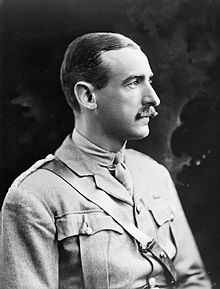
Lieutenant_Colonel_Adrian_Carton_de_Wiart220px-Sir_Adrian_Carton_de_Wiart_by_Sir_William_Orpen

We all experience times in our lives when things are difficult and not going as well as we hoped.

The stress many of us feel day to day from the pressures we are put under effects us all in different ways, often to the detriment of our physical or mental health.

In these difficult times its always good to have role models to help us to reflect on how we are seeing things, to pull us through and to put things into perspective.

By finding larger than life role models, it can often allow us to have a glimpse at what is possible and how we can get through tough times with the right outlook.

I was sent a link today from a friend who I consider as one such character. His name was Sir Adrian Paul Ghislain Carton de Wiart.

I have taken a few paragraphs from the full article about a life that was lived to the Max. His life reads like something out of a Boys Own Novel.

You may not agree with the life he led, but it is more a testament to the strength of character of a person and what is possible despite incredible odds.

You can read at:

http://en.wikipedia.org/wiki/Adrian_Carton_de_Wiart#World_War_II

Sir Adrian Paul Ghislain Carton de Wiart VCKBE,CBCMGDSO (5 May 1880 – 5 June 1963), was an English officer of Belgianand Irish descent.

He fought in the Boer WarWorld War I, and World War II, was shot in the face, head, stomach, ankle, leg, hip and ear, survived a plane crash, tunnelled out of a POW camp, and bit off his own fingers when a doctor wouldn’t amputate them.

He later said “frankly I had enjoyed the war.”

The Oxford Dictionary of National Biography described him thus: “With his black eyepatch and empty sleeve, Carton de Wiart looked like an elegant pirate, and became a figure of legend.”

Carton de Wiart’s serious wound in the Boer War instilled in him a strong desire for physical fitness and he ran, jogged, walked, and played sports on a regular basis.

He was ‘a delightful character and must hold the world record for bad language.’

Victoria Cross
During World War I, Carton de Wiart who at the time was just 36 years old, received the Victoria Cross. (VC), the highest award for gallantry in combat that can be awarded to British Empire forces.

Carton de Wiart got it for ‘most conspicuous bravery, coolness and determination during severe operations of a prolonged nature. It was owing in a great measure to his dauntless courage and inspiring example that a serious reverse was averted. He displayed the utmost energy and courage in forcing our attack home. After three other battalion Commanders had become casualties, he controlled their commands, and ensured that the ground won was maintained at all costs. He frequently exposed himself in the organisation of positions and of supplies, passing unflinchingly through fire barrage of the most intense nature. His gallantry was inspiring to all.’

Prisoner of war
Carton de Wiart was a high profile prisoner.

Carton de Wiart made friends in the prison, especially with General Sir Richard O’ConnorThomas Daniel Knox, 6th Earl of Ranfurly and Lieutenant-General Philip Neame VC.

The four were committed to escaping. He made five attempts including seven months tunnelling.

Once Carton de Wiart evaded capture for eight days disguised as an Italian peasant (which is surprising considering that he was in northern Italy, couldn’t speak Italian, and was 61 years old, with an eye patch, one empty sleeve and multiple injuries and scars).

Ranfurly described Carton de Wiart in captivity as “… a delightful character” and said he “…must hold the record for bad language.” Ranfurly was “…endlessly amused by him. He really is a nice person – superbly outspoken.”[


Retirement


Coming down stairs, he slipped on coconut matting, fell down, broke his back and several vertebrae, and knocked himself unconscious.

He eventually made it to England and into a hospital where he slowly recovered.

The doctors succeeded in extracting an incredible amount of shrapnel from his old wounds. He recovered and then went to Belgium to visit relatives.

Despite all his wounds in the war, Carton de Wiart said at the end:

“Frankly I had enjoyed the war…”.

He retired with his second wife who was 23 years his junior, in Ireland, taking up a life pursuing salmon and the snipe.

Carton de Wiart died at the age of 83 on 5 June 1963.

In his memoirs he wrote, “Governments may think and say as they like, but force cannot be eliminated, and sometimes it is the only real and unanswerable power.”

How ever things are going, its worth pausing for a moment to appreciate, that in most cases, at least you don’t have to bite your own fingers off!

Trust

In a recent article by Morty Lefkoe, he mentions how ‘in recent years many books have stated that “trust” is the new key to success in business. Customers are looking for companies they can trust and companies that can’t be trusted are rapidly losing business. And obviously it would be hard to get a job if the person interviewing you didn’t trust you.

But trust is a key factor in personal relationships also.  It would be difficult for someone to form a really close relationship with you if they didn’t trust you. And most people would probably agree that one of the most important characteristics of their best friends is a high level of trust. 

Apart from obvious things like not keeping your word or betraying a confidence, what is it that people do (or don’t do) that would keep others from trusting them?

The barriers to trust
In their book, The Trusted Advisor, Maister, Green, and Galford point out that one of the primary things that inhibits trust is people being too “self-focused.”   I suggest that there are four specific personal “needs” that result in people being overly self-focused: needing to have the right answers, be liked, appear intelligent, and look good.

I’m not talking about the desire merely to solve problems and be liked.  That’s fine.  I’m talking about when these healthy desires become obsessive needs—when your life is run by these needs, as they are with so many people.

If you are compulsively focused on these and other similar internal needs, you are not available to other people.  You are always obsessively thinking about ways to know the right answer, to impress others, and to look good.  Your focus is inward—on you, not outward—on others.

As a result other people probably will experience you as not interested in them, as not fully present, and as focused on and interested only in yourself.  As a result, their level of trust in you will be low.

Where do these compulsions come from?
What is the source of these obsessive needs and what can you do about stopping them, so you can really “be with” others and inspire trust?

The answer is simple.  Each of the four compulsive needs listed above and other similar ones are the result of several beliefs.

What belief would result in people needing to be liked?  They almost certainly would have the survival strategy belief, what makes me good enough and important is having people think well of me.

What belief would result in people needing to have the right answers and to look good?  They almost certainly would have the survival strategy belief, what makes me good enough and important is being successful.

What belief would result in people needing to appear intelligent?  They almost certainly have the survival strategy belief, what makes me good enough and important is appearing intelligent.

All three of these beliefs imply two other beliefs, I’m not good enough and I’m not important.

Why survival strategy beliefs result in an inward focus
Our survival strategy beliefs have us think that our sense of self—our self-worth—is a function of achieving something outside of ourselves.

Because we “need” this thing—whatever it is—to feel good about ourselves, our lives are devoted to achieving it.  As a result most of our focus is on having others think well of us, success, wanting to look good, and appearing intelligent—not on really being present with another person.

That puts up a barrier between others and us.  And that barrier, in turn, reduces the level of trust people would have in us and impairs our ability to have close relationships.

Eliminating these few beliefs will destroy one of the biggest barrier to really being with other people, which is likely to significantly improve people’s level of trust in you, which likely will improve your relationships.’ Not just with others but with yourself.

Do beliefs produce “driven,” compulsive behaviour?

Why are so many of us “driven” compulsively to seek or do things that frequently aren’t in our own best self-interest?

You probably aren’t surprised that my answer is: beliefs.  But there is a specific type of belief that results in “driven” behaviour.  And it is formed in a very specific way.

In an article, Morty Lefkoe ask us to Imagine you are a young child who has created a host of negative beliefs about yourself or about life. (Very few of us escape childhood without forming a bunch of negative self-esteem beliefs.)

At this point you are in school, interacting with lots of other kids and adults. It dawns on you that you are going to grow up and will have to make your own way in life.

You are confronted with a real dilemma, albeit an unconscious one: “How will I make it in life if there’s something fundamentally wrong with me or the world?”

Imagine the fear and anxiety you must feel when you experience these two conflicting “facts”: On one hand, you sense that you must make it on your own in life. On the other hand, you have concluded that “There’s something fundamentally wrong with me or life that will make it difficult, if not impossible, to make it on my own.”

Fear and anxiety are unpleasant and painful feelings, so children who have them try to find ways of not feeling them. In tens of thousands of sessions with clients, I’ve discovered that people have two basic ways of dealing with the unpleasant feelings that are caused by negative self-esteem beliefs:

First, they use alcohol, drugs, sex, food, or other substances to cover up the feelings and numb themselves or to make themselves feel good.

Second, they develop strategies that help them deal with the anxiety that stems from their negative beliefs. I call them “survival strategies” because the fear one experiences when one has negative self-esteem beliefs often makes one feel as if his survival is being threatened.

When a survival strategy is formed, the child also forms a belief about that strategy:
“What makes me good enough (or important, or worthwhile, etc.) is ….”  A variation of that is: “The way to survive is ….”

Survival strategies are based on a child’s observation of what it takes to feel good about herself, to be important, to be worthwhile, or to be able to deal with life in spite of negative self-esteem beliefs.

For example:

Claire’s parents placed a heavy emphasis on friendships, on what others thought of them, and on impressing people, so Claire concluded that the way to survive was to get everyone to like and approve of her.

David formed a similar belief in a different way:  When he got praise and acknowledgement from his parents he really felt good about himself, in a way he normally didn’t.  So he concluded what made him good enough and important was having people think well of him.

Here’s Lauren’s story: She noticed that people treated her dad with respect and admiration because he had been so successful in business and had so much money, so Lauren concluded that what made her important and good enough was being financially successful.

Mike lived in a community where the people who were considered important and given respect were in gangs and carried Knives, so he chose that as his survival strategy.

By the way, one way to know if you have negative self-esteem beliefs is to ask yourself: What makes you good enough [or important, or worthwhile, etc.?  When you answer anything other than: “Nothing,” it becomes clear that you need whatever you answered in order to be okay.)

 Once you decide that a positive sense of yourself is “because of” anything, you’ve created a lifelong problem.  For example, if you believe the only way to be good enough is to be wealthy and have a big house, your sense of worth is linked to those conditions. If you aren’t wealthy and don’t have a big house, you are forced to face your belief that you’re not good enough, which produces anxiety. Moreover, even if your survival strategy is achieved, there’s the danger of losing it. Total disaster is always just around the corner for you. Life becomes a sea of anxiety, in which you are constantly struggling to meet the conditions you have made for being good enough. Your self-esteem is always in question.

Tom, an executive in a London Bank, earns over £200,000 a year. His core belief is I don’t matter, and his survival strategy belief is: “What makes me worthwhile is being seen as important by others.” As a result, Tom becomes anxious whenever a new person gets hired, or a colleague wins praise, or he isn’t included in a meeting, or his boss doesn’t acknowledge him after he’s completed a project.

Rachel has the survival strategy belief: “What makes me acceptable is being beautiful.” For most of her life, she has lived comfortably with that belief. Her beauty earned her quite a bit of attention, admiration, and even love. But now Rachel is approaching fifty, and she’s frightened. The march of time is threatening to rob her of the one thing that she believes makes her acceptable. She has become increasingly depressed; every time a man fails to look at her admiringly, she has a deep feeling of not being okay.

One consequence of being run by survival strategy beliefs is that instead of living out of choices and pleasure—doing things because you want to do them—you do them primarily to survive (to feel okay about yourself). 

You experience your survival as dependent on the success of your survival strategy. The need to fulfil the terms of your survival strategy dominates your life.

Someone once said, “You can never get enough of what you never really wanted in the first place.” That’s an excellent description of trying to live using survival strategies to compensate for negative self-esteem beliefs. Once you say you’re not worthwhile just the way you are, no amount of accomplishment or praise will provide the unconditional sense of self-esteem you want and need.

People who have beliefs that are indicative of low self-esteem are not just criminals or drug addicts or unsuccessful people or those who suffer from deep depression. Many people with low self-esteem are visibly successful, living in nice homes with stable families. What distinguishes people is not their self-esteem beliefs, but their survival strategies—the ways they cope with a negative sense of themselves.

Although the dysfunctional behaviour that people exhibit is usually a direct result of their survival strategy beliefs, the energy that drives the survival strategies is the underlying negative self-esteem.

We don’t want to have to acknowledge the negative self-esteem belief (it’s too scary), so we do whatever it takes to manifest the survival strategy belief and convince ourselves and others that the survival strategy is actually the thing that is driving us. The paradox is that the underlying self esteem belief is so strong that it will defend the survival strategy, which makes it hard to resolve, especially if externally these strategies have given us what could be seen as positive tangible results, like a big house, good job, honed body etc.

That’s why the underlying self-esteem should be eliminated before the survival strategy belief.

This is not to say that being wealthy, successful or popular are bad things. On the contrary, they are great when we are coming from the position of being good enough, as opposed to being the things that make us good enough in the form of a survival strategy.

By creating a survival strategy we create an identity for ourselves that can be taken away at any time, either by somebody or circumstances or just by time itself.

Once we look at the underlying beliefs that have driven us up till now, we can then decide whether the strategies we have used up until this point are still valid.