Be like a horse whisperer

_50112388_carneddauponies4

A good friend of mine is a horse whisper.

For those of you who may have heard of or seen the film ‘the horse whisperer’ starring Robert Redford as Marvin Earl “Monty” Roberts,may be familiar with the role of a horse whisper.

My friend had the good fortune to train and study with Monty Roberts ad has a strong friendship with him.

Roberts believes that horses use a non-verbal language, which he terms “Equus,” and that humans can use this language to communicate with horses. He writes that he realized that they used a discernible, effective and predictable body language to communicate, set boundaries, show fear and express annoyance, relaxation or affection, and that he came to understand that utilizing this silent language would allow training to commence in a much more effective and humane manner, encouraging true partnership between horses and humans.

From his training with Monty and his growing reputation in Wales within the equine ferternity, my friend had the good fortune to be asked to attempt to tame some wild ponies up on the snowdownian mountains in Wales. This was to be televised by on Channel 4 over four episodes.

The ponies where ferral and in danger of becoming extinct because nobody had good reason to keep the breed alive because it was so wild.

It was a big ask but one my friend believed he could do.

Using all the techniques he had been taught by Monty, along with his natural and deep understanding of horses, having been brought up with them all his life, he managed to do the impossible and tame the ponies, to the point that the finale of the programme was to take one of the ponies to a horse show, riden by no other than his 5 year old daughter.

Everything was perfect for the show. The pony was calm, his daughter was confident and so was my friend. Everything had worked. That is until it rained, and the pony went mad!

It was as though it reverted back to its ferral ways, to the point that they cancelled the showing at the horse show.

This is the point that most of us give up on ourselves.

We may go to specialists, or read a book, go on a course, or what ever it is that we feel will turn us into the person we want to be and everything can be going along lovely. Then a few weeks in, something happens that finds us back to our old ways and we throw the towel in, with the belief that nothing has worked and continue along our old path.

Heres what a experienced horseman like my friend did in this same situation.

At first he was human. He kicked a bucket, swore, believed nothing worked, doubted himself and his system and the chance that these ponies could ever really be tame etc.

Then, after the tantrum, he calmed down and re examined the facts. More importantly the variable that made the difference to the ponies calmness that he had missed.

The rain.

With that he simply went back to the ponies and his training ground and implemented his knowledge, incorporating training in the rain or simulated versions of it until the ponies where conditioned to how the rain felt even in an unatural environment like someone on their back!

A few weeks later and my friend was showing the Pony with his daughter riding it again, without concern for the rain or his daughters safety. In fact its testiment to his belief in his system and what can be achieved that he would let his daughter go back on the pony. It came first in class!

The last time I visited him some months later, this pony was in the paddock very happy, calm and content with no other issues.

This is what we must be prepered to do if we are to succeed.

We must start to look at what is ‘the Rain’ that is knocking us back, rather than that we are broken or unchangable.

Most things come down to the basic foundations, just applied to a missed issue, that once identified can just be subjected to the original, basic fundementals again and change will happen.

My friend didnt have a time frame for this particular pony to reach its potential. That would be unfair on the pony.

Even if he had worked on ten similar ponies previously and each took one week to tame, it made little difference to him. ‘It takes as long as it takes’, he told me, ‘but it will happen’.

His philospophy is simple. ‘What I do works, this is a fact. However, how long it takes this little pony to see that is undecided for both of us. If he sticks with me, (it was not really a choice in this intance for the pony as he was not a paying client!) he will get there, whether it takes 2 weeks or 2 years!

And thats it. Forget about 10 minute Abs, 1 hour confidence, or what ever other instant gratification product is being touted.

Fundementals, hard work and self belief is what you need to succeed, and if, up till now, you have failed, the fundementals of what you are pursuing, hard work and self belief are probaly your ‘Rain’ and a good place to start.

Win or lose, I still win!

squash_ball

I was talking with a good friend over the weekend about playing squash. Or more to the point, the fact that he continually loses to a particular opponent.

My question was, ‘Don’t you get pissed off losing all the time and doesn’t the other bloke get bored?’

Most of us want to win, even if its only once in a while. We need it to keep our motivation going and prevent us getting frustrated or simply want to give up. And on the other hand, not being challenged sufficiently can lead to us becoming bored and lethargic.

What he said in response was really interesting.

He said he doesn’t play this particular guy to win in terms of points. He plays him to improve his game. He plays him to learn how to be a better player. He calibrates his improvement on the amount of points he achieves and the length of time the rally’s go on for in each session. If this is improving, he wins.

He also mentioned its not all one sided. My friends advantage over his squash partner is his fitness, so he plays to this strength and uses every shot possible to make his opponent run around in an attempt to tire him out. Which in itself has its sadistic rewards!

What he has simply done, is set himself up to win by creating his own rules for what winning means.

Every time he scores points, lasts longer in the rally’s and makes his friend knacker himself out, he wins. He has rigged the game with his own rules for winning which means he never loses.

Its is a brilliant concept and a fantastic feedback loop for your brain, focusing it on succeeding as opposed to failing.

This is something lots of sports coaches do now a days. They spend a small amount of time on what went wrong and much more on what went right. This way, we program our brains to look for success patterns. Its the 80/20 rule. 80 percent focusing on success and 20 percent on the problem areas.

His friend also keeps returning because, even if he is not improving his game as much as he would playing a more experienced player, his fitness is being improved never the less by training with a much fitter person.

 I like simple effective strategies and this is one of them. This is not about convincing yourself into something you don’t believe. A loser trying to kid himself so to speak.

This is about not making winning about comparisson. Comparisson to others does not have to define your success as an individual. This is about redefining what you make certain things mean and challenging them to your advantage. (see advantage theory blog)

How are you setting yourself up to lose at the moment and how can you turn it into a win?Are you comparing your results with someone elses, rather than comparing them to how far you have improved?

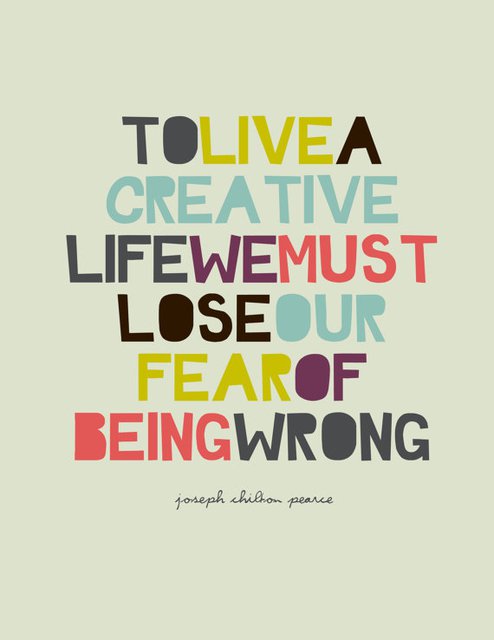
‘To live a creative life we must loose the fear to be wrong’

imgCreativeLife

I saw this the other day and it resonated with me because at the time I was making what I believed to be one of those decisions that the rest of my life depended on.

It didn’t, like most decisions, but all the same it was the over bearing feeling of being wrong and the consequences that I believed it would come with, that can so often paralyze us from taking action.

Even writing these posts I catch myself worrying about whether my thoughts are relevant or even correct, how others will respond and how it may effect me.

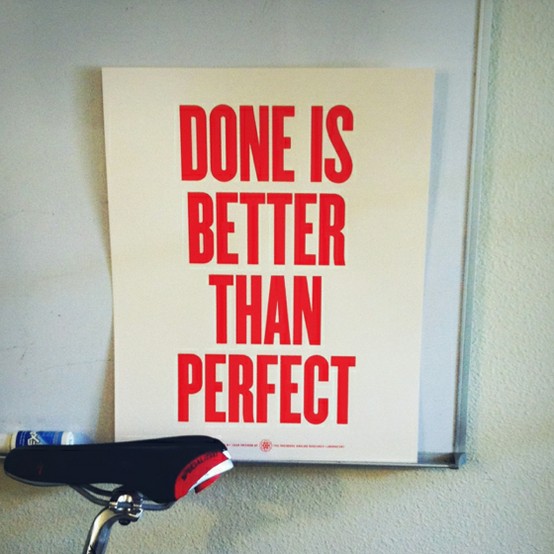
Luckily I was given a good piece of advice by a friend, who just said if I waited for the perfect post I would never get started, which I believe happens to lots of people starting out writing. If at a later date it turns out to be crap, I can just delete it after all.

Its easier to back engineer a decision after you have made it and decide whether you where right or not, or how you can in fact benefit from it, but it a lot harder making choices before hand and all the consequences that may result from it.

In most cases however its never to late to turn around and most decisions do not have to decide your fate.

perfect

Its all Bulls**t

I wrote this some time ago but came accross it just the other day and quite liked it. Alot of stuff happened for me last year that led to similar sermons and beliefs which just leads to more questions!. I do not say it is true, but perhaps a truth if it works for you. I came accross a intelligent discussion regarding this subject with Proffessor Richard Dawkins and the Lord Rabbi Jonathan Sacks which you can watch on:

http://www.youtube.com/watch?v=roFdPHdhgKQ

Today I spent a lot of my time texting my friend about the need to commit to something and that regardless of how it works out it doesn’t matter. The point is that if you commit somehow the universe will conspire to help you. Most of the time when I write these sort of text I do so because that’s what I think people want to hear.

But its not really what I want to say, although at the time I think I get caught up in in because at some level, like all of us, and the reason self help books fly off the shelf and why we desperately we hope we will somehow win the lottery, I also want to believe things can be better, that someone is looking out for us. That if we just follow our dreams somehow everything will fall into place.

Whilst I was writing all this bullshit to my friend I somehow felt drained, almost flat. I felt I had run out of energy. It was as if, although I was writing positive stuff, it was somehow out of alignment to my beliefs. As though I was spreading the gospel for a religion I didn’t believe in. I cant sell something I don’t believe in and this is no different. It was taking its toll.

When we live in-authentically we become out of alignment.

I had spouted my universal energy gobbleygook and then imagined that everything would work out.

What had started the days text with my friend was regarding my meeting with the toastmasters that evening.

My friend was not championing the idea and felt I did not need to go in order to achieve what I wanted to for my future endeavors. I had told her that it was not whether it was relevant but that I had said I would do it and that I must trust my own convictions rather than the opinions of others, other wise we can never respect or trust ourselves but instead live our lives at the mercy and approval of others opinions.

So that night I would have my meeting. I would go and be faithful to my mission to make something of myself.

I was focused. It was written down and I would do it. I got home from work with 30 mins to spare. To short for anyone less than 100 percent focus. Into the shower and changed and straight down to the station. Waterloo and then walk to the underground. Get to bank and then Navigated my way via my map to the Bunch of Grapes. Made it. It was meant to be! I had done it. I had kept my word! Surely this was the start of great things!

No. What it was the start of was me being told that there where no meetings here tonight. No Toastmasters here. Had I made a mistake with the dates? I was sure it was the 19th. But I’ve been wrong before.

I phoned a friend thinking I would make the most of being in the city – I would reframe the problem and all that jazz and do something positive. No answer.

Home it is then. Perhaps that’s where something would happen to explain my reason for following through. I thought that because I’d got my myself in gear, even though the meeting was not going to happen surely something else would happen. Fate would intervene and my efforts would make sense. A chance meeting or something. So I made my way onto the jammed trains and back to Surbiton. No chance meetings there.

So I thought I’d go to the pub. Empty. Walk home, off license, two ciders and a lion bar was my universal prize for going through with it! Congratulations.

So whats the conclusion? What its always been, and why my grandfather and my mother would always wind me up with their belief that prayer sorts everything out. There is nothing. No one is looking down, the universe is not conspiring and fortune doesn’t favor the brave – anymore than it does the loser that wins the lottery. Its all chance.

Sometimes things work out, sometimes they don’t. Things often are not fare and things go badly for good people.

Just because I get of my ass in gear and do something does not necessarily mean it will all work out – in fact I may stand a bloody good chance of wasting my time as I did today. I would have been just as well off sat having a beer watching the football. I would have achieved the same. In fact I would have saved £8.50 if I hadn’t bothered. I would have made money by not making an effort in fact.

So do we give up. Sit on our asses?

I don’t think so. We have a few years of this so we may as well do something.

But the something has to be done by us. We need to get out of the way of delusions, of positive mumbo jumbo. We need to stop kidding ourselves that its not just us.

Sure there is right place at the right time or chance meetings but that’s all they are.

Things just are. As human beings we have to try and make meaning. We need to make sense of it all.

I love this stuff and as I mentioned I get seduced by its false hopes, so I began convincing myself that it was a test of my commitment, that it was the universe testing me to see if id follow through, that I would get out of the house. How I would react. And then as a reward it give me something.

Cognitive dissonance at its finest!

Well life isn’t Dawsons creek, it a series of events that just happen. We can put meaning to them however we want but the fact remains that things just happen, good and bad to good and bad people.

For me the sooner we can get away from meaning the sooner we can move forwards and achieve instead of waiting for divine intervention or universal alignment or that somehow we have been blessed because we have achieved something. It just wastes to much energy. Energy that could be used to get something done.

Of course this is only a belief and not the truth.

I feel liberated but as the night draws on I can’t help but feel flat believing there is nothing else.

I find myself running through the archives of my mind looking for meaning…..

Advantage Strategy – Concept Determines Experience

The last time I was putting that helmet on, just the smell of the rubber made me feel so bad. This time everything is totally different. Its still the same smell, but its related to something else. Its not my enemy anymore. I think the biggest link that I created is this;

Where you are going to go, normally you shouldn’t be there, but as soon as you wear that suit, it allows you to be there. Its the only way to survive in that hostile environment, and by thinking about that, changes the whole picture.”

When I heard Felix Baumgartner say this, I paused the TV and quickly jotted it down.

It resonated with me particularly this week because I have been working on the idea of how concept determines experience and whether, with the right system, we can turn any situation to our advantage regardless of what it is, or whether this is just wishful, naive thinking.

Reframing is nothing new. NLP has spoken about it since the beginning and the idea that every event or situation is neutral. It is just our beliefs that give an occurrence its identity to which we then attach an emotional and behavioral response to.

Also it was apparent from the interviews with Felix that there where lots of different psychological techniques that needed to applied to create his new belief that his Suit was not the enemy anymore, but his savior.

In order to change your beliefs about something you need leverage. You must really want to change something to have a chance of continued success.

However that was not enough. Felix really wanted to jump from space more than anything but his claustrophobia from the suit, (or what this symptom really symbolised) – made it impossible. He had inner conflict.

“I feared and hated the suit because of my desire for freedom.

Because the real cause of Felix’s problem wasn’t the means value, which he called freedom, which had in the past aloud him to achieve all his other feats.

It was really a question of, ‘what does not having the freedom mean’ to him deep down which turned out to be, as he said himself :

“The worry is I won’t fly supersonic or, in the worst-case scenario, I’m not as fast as Joe Kittinger was in 1960. You have to explain to the world that, 52 years later, you’re slower than Joe? My worst fear was not dying, but failing to fly supersonic.”

So sometimes even when you consciously really want something, if underneath there is something that you fear more, then you will fail.

Felix did lots of psychological practices to change his mind, and yet after watching the BBC2 programme and reading lots of articles about him what initially appears to have provoked him to make the change and come back to the space programme was jealousy.

It was only when he saw footage of a replacement doing his job in testing that he was shocked into returning.

“I felt jealous,” he says, “and I thought: ‘You’re not supposed to be in my suit.’ I saw the BBC film yesterday and it’s disturbing because you see my name on the helmet, then you realise: ‘Hey, that’s not Felix. Some other guy is in there.’ No offence to Rob [the test pilot].

……. it really hurt my feelings when I saw Rob in my suit. It felt like I’d been replaced. Of course, it was part of the journey, but when you’re inside that situation you never like drama.”

The chicken and egg question I then asked myself was this.

Would he of come back and achieved what he did without the therapy before hand?

After all, the therapy Felix had done up to this point may have helped but it did not bring him back. Seeing someone else in his suit did.

Would he have come back because of jealousy anyway, but then still been unable to wear the suit because of the underlying fears he had, had he not done the therapy previously to clear them up?

Also did he need therapy prior to coming back in order to be able to reframe the meaning of the suit when he did return or would he have done that naturally without it?

Do you need the seed first of an idea first, or great soil to plant it in order to grow it?

Which ever one it is, what is sure is that Felix once provoked, then had enough leverage to act and see his goals through.

Which brings me back round to what I mentioned earlier, which I call The Advantage Strategy.

And I have found it is a great way to ‘change my soil’ or my perception in every situation.

Whenever something I perceive as negative happens I quickly ask my self ‘WHATS MY ADVANTAGE?’ (I.E – How can I win in this situation. How can it benefit me. How can I turn this to my Advantage)

It sounds simple, and perhaps at first glance naive or insulting. However what I am suggesting is that what it does is it directs your mind to find aspects from what can often be a terrible situation and draw strength from them in order to cope.

It doesn’t necessarily mean everything will be roseY and easy. That would be madness. Life’s not like that.

What I am saying is whatever our reality is it is not going away regardless of how we react to it. As Katie Byron says, “Everytime I fight reality I lose”.

By asking what is my advantage, begins to condition the mind to search for proactive and useful ways to channel our thoughts and actions just like it did for Felix with the suit.

 Its still the same smell, but its related to something else.

Its not my enemy anymore.

I think the biggest link that I created is this;

Where you are going to go, normally you shouldn’t be there, but as soon as you wear that suit, it allows you to be there. Its the only way to survive in that hostile environment, and by thinking about that, changes the whole picture.”

Try iT Perhaps and see what comes into your mind. You may surprise yourself.


The man who Fell to Earth

I watched Felix Baumgartner jump from space on BBC 2 last night and it was amazing to watch and to follow the journey he and he team went through in order to accomplish such a feat. What really interested me was the psychological elements Felix went through in preparation for his jump and the different tools he used, and were used by his therapists to get him past his stuck state. I have highlighted in bold some of the things that interested me in this article by Linda Nylind for the Guardian. In my next blog I will focus on an element that Felix used to help him which I use and call Advantage Strategy.

“They call me Fearless Felix,” says the man who, with nonchalant courage, fell to earth faster than the speed of sound. Less than three weeks ago, Felix Baumgartner reached an altitude of 128,100 feet in a small capsule attached to a helium balloon before he plummeted back down again through 24 miles of cold blackness at a top speed of 833.9 miles per hour.

His space jump was watched live on YouTube by more than eight million people, and the fevered reaction online was matched by saturation coverage in the traditional media. As a curiously driven man, who had dreamed of flying ever since he was a five-year-old boy in Austria, drawing detailed pictures of himself soaring through the sky, Baumgartner had achieved his greatest ambition. He had moved from the often-illegal activity of base-jumping – having blagged his way past lax security at some of the world tallest buildings so his daredevil talents could be noticed – and become one of the world’s most celebrated men.

Baumgartner sits in a plush chair in a London hotel and arches a wry eyebrow at his cartoonish nickname. “You and I know Fearless Felix doesn’t really exist,” he says, quietly, and more thoughtfully than might be expected. “He might seem like a cool guy, but I’ve had to address a real psychological battle. It’s been way harder than stepping out into space.”

He may be a certified celebrity, with an American twang to his Austrian accent, but he talks with the zeal of an ordinary man who has just survived an extraordinary experience. Baumgartner also uses the very human confines of psychological frailty, rather than the vast expanse of space, to frame his achievement. A canny publicist, the 43-year-old is smart enough to recognise that there is real strength in admitting moments of weakness. But there is also something surprisingly moving in his revelations that the source of his suffocating fear was an old-fashioned spacesuit.

“I feared and hated the suit because of my desire for freedom. I started skydiving because I loved the idea of freedom. But you get trapped in a spacesuit, and people are adding weights to it every day.

“They’d say, ‘Right, we need oxygen bottles,’ and then a couple of weeks later it would be: ‘You need a chest bag.’ That chest bag became bigger and bigger and the suit is twice my normal weight. Skydiving is now no fun at all. It’s scary. I remember my first dive with this suit. I was standing at the exit at 30,000 feet, and it felt like my very first skydive. The same fear from 25 years ago is back. It never felt good in that suit because it never became a second skin.

“Normally, when I skydive, even in winter, I wear very thin gloves. I want to be flexible, with fast reactions. But a spacesuit slows you down. You have big gloves and you cannot move your head very well. A natural movement, when you pull your chute, is to look up. But with the suit you cannot do this. So now I have two mirrors on my gloves.

“You open the chute and you look down at the mirror to see if it’s fully inflated. Every skill I had developed over the years became pretty useless as soon as I stepped into the space suit. And after 25 years as a professional, it makes you feel weak and exposed.”

Baumgartner cut a lonely figure as he prepared to leap into exultation or oblivion. But his vulnerability was bound up in claustrophobia. “I only started getting anxious if I was in the suit more than an hour. You can fight your way through an hour. But if it takes five hours you’re never going to win that battle. So that’s why I had to address it.”

The problem became so distressing that Baumgartner required psychiatric help.

“This is the first time I needed [psychological] help,” he winces. “It was so embarrassing in the beginning.

They’d say things like, ‘How would you describe what happened, to your son?'”

He scrunches up his face. “I don’t have a son. So I didn’t feel like talking to my imaginary son. But at the same time, I thought: ‘If it gets rid of my anxiety, I’ll talk to my invisible son.'”

“Can you imagine how embarrassing it is to have two strangers listening to you talk to your invisible son about your deepest fears?”

Even the smell of the suit unsettled him. “It was the smell of rubber. That was always the key moment. But my anxiety started the day before.

I would not sleep well, and then you have to drive to Lancaster [in California, where his test capsule was based]. When you get over that last hill you can see Lancaster down there … and you know the suit is waiting.

The psychiatrist called it the ‘train of negative thoughts’. I was always riding that dark train. He said you have to get off it with positive thinking. It’s easy to say, and hard to accomplish. Still, we did it. I started to feel strong again.”

Yet Baumgartner had walked away from the project for six months.

It was only when he saw footage of a replacement doing his job in testing that he was shocked into returning.

“I felt jealous,” he says, “and I thought: ‘You’re not supposed to be in my suit.’ I saw the BBC film yesterday [Space Dive, which airs on BBC2 on Sunday] and it’s disturbing because you see my name on the helmet, then you realise: ‘Hey, that’s not Felix. Some other guy is in there.’ No offence to Rob [the test pilot].

We had this big test and they couldn’t say: ‘Hey, we’ll skip it because Felix is too weak.’ But it really hurt my feelings when I saw Rob in my suit. It felt like I’d been replaced. Of course, it was part of the journey, but when you’re inside that situation you never like drama.”

“The toughest moment was when I lost my team after I came back from Austria,” he says. “My psychiatrist told me: ‘Nobody thinks you can do it anymore. You have to get your leadership back.’ I went into this room and I could see everybody sitting on the other side of this table. All my friends. And just by the body language I could tell: ‘Nobody thinks I can do it anymore.'”

Did Joe doubt him? “Everybody,” he says sadly. As a former soldier and a self-proclaimed team-leader and man of action, Baumgartner was shaken by the loss of faith in him. “Art Thompson [the project director]. Mike Todd [his life support engineer]. I never thought Mike would doubt me because he was like my father. He was the key guy in those quiet moments when he was dressing me in the locker room – like a boxer with his coach before he goes to fight. But he was sitting on the other side now. Nobody had faith in me anymore. That was a really bad moment. This claustrophobia was the only weakness I had. It’s not my fault. It’s just in my mind.”

Felix Baumgartner sits in his capsule during preparations for the final manned flight of the Red Bull Stratos mission in Roswell, New Mexico Photograph: Joerg Mitter/AP

Baumgartner’s words are poignant rather than plaintive – but he sounds like a sports jock when describing the “game plan” and “strategy” he developed to regain control. “I thought, whatever it takes to get my leadership back, I’m willing to do it. After five days it was working. Two weeks later, everyone was positive and we knew I was ready.”

Doubt, however, still plagued him. “The worry is I won’t fly supersonic or, in the worst-case scenario, I’m not as fast as Joe Kittinger was in 1960. You have to explain to the world that, 52 years later, you’re slower than Joe? It’s another pressure. I don’t think people get what it means to do something when the whole world – from the pope to the president of the US – is watching you.”

His problems continued. As he floated towards the 24 mile-high mark – it took almost three hours for the balloon to lift his Red Bull Stratos capsule into space – Baumgartner’s visor began to cloud as he exhaled. The prospect of doing the jump “half-blind” threatened the mission, and he had to endure various tests before it was established that his equipment was working.

He had less time once he had left his capsule, and begun to whirl through space at a speed which sent him into an inevitable spin. “I had one minute to find a solution. While spinning, I’m thinking: ‘Should I push the button to release my drogue chute, to stop that spin? But that would mean it’s over and I’m not going to fly supersonic – so should I tough it out and find a solution?

“I had to maintain my cool and this is what I’ve been doing the last 25 years – being focused and not freaking out. In my head I was cool-minded. My worst fear was not dying, but failing to fly supersonic. If you’re at 3.6 Gs for six seconds, it fires the drogue chute. I was rotating, but it was hard to tell how many Gs I was at. I felt I had it under control and, hey, I’m not dying. But I couldn’t know how close the drogue chute was to firing. In the end it was OK, but it was difficult, and that’s why Joe held the record for 52 years. Lots of people underestimated it.”

Felix Baumgartner jumps out of the capsule on his way to breaking the world record for the highest free fall in history. Photograph: Handout/Getty Images

Baumgartner thinks hard when asked about his jump’s sweetest moment. “I had a couple of good moments,” he eventually says. “One was standing with my feet outside the capsule just before I stepped off. We’d been working towards that for five years. As soon as I was standing there – completely released from all the cables – I knew it was going to happen. That was a big relief and a really unique, outstanding moment.

“And then when you open your parachute you know it’s over – I’m still alive! Mike Todd was the last person I saw before going up. He’d said, ‘OK, see you on the ground, buddy.’ But you could tell he wasn’t 100% sure. I wasn’t either. We prepare for the worst but hope for the best. And then, three hours later, Mike is the guy I see first after it’s all over. Mike worried about me like I’m his son. But when he’s happy he looks 16 again. I was looking forward to seeing that smile.”

This is Baumgartner at his most likable; he is also touching when describing the emotional toll on his mother, Ava, whose sister was buried just a week before he made his jump. His life is not always simple and next week his lawyers will appeal his conviction for punching a lorry driver during a traffic jam in 2010. And so how will a man consumed by outrageous challenges rekindle the intensity of his space jump? “I don’t have to,” he replies, confirming his plan to become a rescue-helicopter pilot. “I reached a peak and I don’t have to top it again. A lot of kids now think of me as Fearless Felix – but I hope I can make fear cool. All these kids can know that Felix also has fear. So they can address their own fears. I did it – at first I would consider the suit a handicap. And handicapped people have to find a way to live with their handicap.

The suit was my worst enemy, but it became my friend – because the higher you go, the more you need the suit. It gives you the only way to survive. I learned to love the suit up there. That’s an even bigger message than flying supersonic.”

Space Dive is on BBC2 on Sunday at 8.30pm

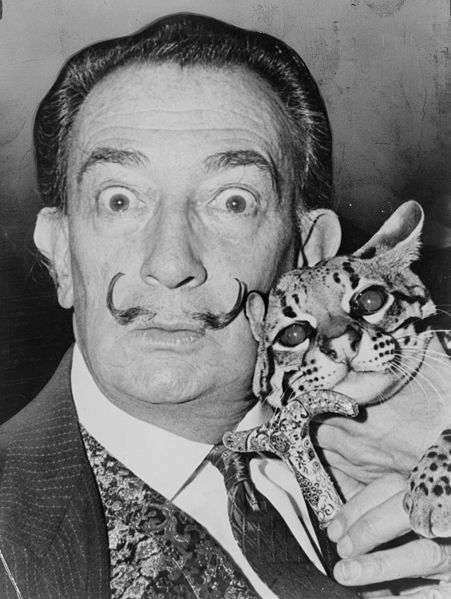
Salvador Dalí quotes

 
“The difference between false memories and true ones is the
same as for jewels: it is always the false ones that look the
most real, the most brilliant.”
 
“Mistakes are almost always of a sacred nature. Never try to correct them. On the contrary: rationalize them, understand them thoroughly. After that, it will be possible for you to sublimate them.”
 
“So little of what could happen does happen.”
 
“Everything alters me, but nothing changes me.”

Food for thought

Whilst making my breakfast this morning I went to the draw to get a wooden spoon only to find a draw full of T Towels. It had actually been over 6 months that the utensils had been moved from this draw, to one nearer the stove!

Yet regardless of this I had still gone to the old draw for my spoon irrelevant of the fact that on most other occasions I have gone to the correct draw.

Prior to the change over however the previous arrangement had been in place for over four years. For four years my brain had been conditioned day in, day out, to go to what is now the T towel draw if I wanted a spoon.

This got me thinking how well it illustrates the way our brains works regarding the making of new behaviors. Also how old habits continue to be operational, despite not being used, and how easy we can revert back to them.

I speak to people before who have attempted to change particular areas of their lives and despite being successful for a period of time, have found themselves reverting back to old habits.

So often this will lead to a declaration of failure and a sense of determinism that they are genetically programmed to continue with their negative behaviors along with sense that it is pointless to investigate further as to why they have done so.

It seems so easy today to be lured into believing that change is always instant, permanent and without any need for conditioning.

 The indecent with the wooden spoon at breakfast illustrates quite well that this isn’t how our brains work or how we make permanent change.

 The fact is that change is instant.

For example, six months ago I changed the draws over in ten minutes and it was done.

However the upkeep and conditioning required for me to go to the right draw after the change was done can take a little longer because this is exactly how our brains operate.

In my case over six months!

Imagine if, when I went to get my spoon, I had followed the protocol many of us do when we relapse back to old behaviors.

I would have first beaten myself up for going to the wrong draw and then concluded that change was impossible – (Its been over 6 months after all!) I would be convinced that I could never break the old pattern of going to this draw whenever I needed a wooden spoon. (Regardless of the fact on most occasions I went to the correct draw.)

I would have to face up to the fact that this is just who I am and change the draws back to how they used to be!!

What I did in reality was to close the towel draw and go over to the utensil draw, got the spoon I wanted out and finished making my breakfast.

It sounds ridiculous in this context doesn’t it that I would have given up, but this is how so many of us react when we revert back to old patterns of behavior that we are currently attempting to change.

Instead of thinking in terms of failure we should perhaps just look at these relapses as a brain that is working perfectly.

Any detraction’s are just indicators that we simply need to condition the desired new behavior a bit more in order to make it a permanent primary action.

Do limiting beliefs behave like Parasites?


Today we are becoming much more self reflective on the way that we feel and the way that we behave.

We appear to be increasingly inquisitive towards the correlation of everyday interactions and our corresponding behavior in those situations. This introspection often leads us to make a hasty diagnosis, and align ourselves closer to what we believe to be our vulnerabilities, insecurities and shortcomings.

Whether it be with a therapist or coach, self analysis or through the ever increasing selection of self help material, we can find ourselves coming to conclusions that encourage us to embark on what we perceive to be a new and better course of actions and behaviors.

Or at least that is what we hope.

But on closer inspection, what is often presented as a new behavior or altered belief, can often just be a masquerade for a deeper underlying issue that has either been unsuccessfully transposed or simply undetected.

In fact a person can often believe that they have rid themselves of a limiting belief and profess they have been totally transformed, but yet still display the exact same behavior pattern whilst being totally oblivious to it.

For example, one may have strived for physical perfection and from therapeutic inquiry recognised that this pursuit had evolved through a need for significance at an earlier age. This discovery of a deep seated belief regarding insignificance, could then result in setting about creating a new protocol that proves to the outside world that this belief no longer holds true and that self worth has been reclaimed.

How is this so often done?

One course of action to show you are cured and back in control might be to create an even more toned physique!

And so you see, the cycle begins again, but the governing, original belief is hidden from sight because it now comes under the illusion that what is being done is out of approval and an expression of a new found self acceptance. However there is a good chance the same driving force for external validation is at work and that nothing has really changed.

What also seems to happen which convinces us of change is the way in which an underlying issue can use, what appears to be a polar opposite behavioral pattern.

For example, a passive person who on reflection realises they had been submissive in order to be liked may retaliate and appear to become “assertive” (These are usually the ones telling others how confident and assertive they are, often overly compensating in either verbal or physical behavior, which often poses the question of who are they really trying to convince?)

The survival strategy may have changed from being passive to being outwardly assertive, but the underlying cause which could be “I’m unlikeable” is still there. But instead of saying “I’m unlikeable so I will be submissive”, a person may say instead “I’m unlikeable, so I will become outwardly dominant to disguise my insecurity.

The inner feeling and drivers are still the same, its just the external characteristics that have changed. Of course a lot of this is going on out of conscious awareness and therefore goes undetected.

Much like a parasite fooling its host in order to survive, our beliefs seem to be able to create a way to live on often without our knowledge.

Because what ever is driving a particular behavior is often a survival strategy hung on the end of a self limiting belief.

And like anything regarding survival the main function is to protect the organism at all costs. And if it believes that doing a certain behavioral pattern will produce this, it will find away to remain functioning.

Its not to say that becoming assertive or getting in shape is an issue. On the contrary, to better yourself in anyway is to be commemorated.

What may be worth looking at however, is whether the changes we believe we want to make or feel we have made already, are actually propelling us forward in a positive and fulfilling direction that we genuinely want to head in, or whether we are really concealing an underlying survival strategy or a limiting belief about ourselves.

Why?

“Why did you give up on yourself to fit in with someone else?
Why did you go into their world and not stay in your own?
Why did you not have enough conviction to stay in your world,
where others would be inspired to change and fit into yours?”

unknown

“A true artist is not one who is inspired, but one who inspires others.”
Salvador Dalí