How do we know if we are Leaders?

doxierhino1

“Leadership is getting people to do what they often don’t want to do and to get them to do it willingly.”General Schwarzkopf

When I think of people I admire and look upon as a leader it’s not because they promise me any guarantees of success but rather they stand for a unified mission that in its uptake offers a chance to stand for something more than we currently are committing to.

And not through brain washing, bribes or threats but by connecting to our personal values and our basic instincts, the same values and instincts that taken to extremes we are willing to sacrifice everything for.

Leadership is finding a way to understand those qualities in a person and to be willing to invest the time to find how to stir those emotions in a way that allows us not only break through limitations that we thought impossible before meeting them, but also to understand that fundamentally we really did it ourselves.

In my mind a leader is a catalyst for change.

I heard it said that whenever there is three people there is always a leader, and not always the person who thinks they are. It’s the one who shows up and takes control when the often self-appointed leader is ducking for cover.

However I think it only really takes one to be a leader. We have a choice to be leaders in our own right as soon as we take ownership of who we are and the situations we are face with.

We become leaders when we except responsibility for what happens to us. Not blame but responsibility in taking a stand to handle it and not become victims of our circumstances.

And this is no easy feat. Difficult problems or hard choices often do not offer us a clear choice. Often after years of deliberation there is often no clear answer towards a definitive right or wrong decision.

In an age of overwhelming information and facts it seems impossible to find a consensus on anything. But despite this dilemma of what to do and the uncertainty, we are offered one absolute. We are offered an opportunity to choose who we want to be through these decisions.

We cannot guarantee that we have made the right choice, but depending on the choice we make it will be based on either our fears or desires. We can choose in those decisions what we stand for. Within these hard choices lies the possibility for each of us to demonstrate leadership.

Often we are unable to change the facts, but we can take charge of how we allow ourselves to interpret, respond and act in sight of those facts. We have the power to take charge of our thinking.

Regardless of our outlook on life, whether it’s through a positive or negative filter we still can stand in the possibility that there is always a way. Not because this is a fact, but because we understand that by doing so we change our intention and therefore the options that become available to us.

It’s not about positive thinking or unrealistic expectations but rather understanding how we work from an evolutionary perspective and how we have evolved to survive and using that technology to our advantage.

If Neuroscience has shown us that imagination is just another way to enhance the brains GPS system, (known as the posterior parietal cortex) then surely it is our responsibility to do that in some form.

To dream. Not to fantasise, but to have faith.

Whether we believe the glass to be half full or half empty is perhaps not as important as realising that whichever perspective we come from, the fact is that there is a glass that has potential for more in it. A possibility that we can be more. In fact 50 percent more in this case.

Just that action alone will begin to change our intentions and what presents itself as an opportunity.

This works on the same principal as the “Baader-Meinhof Phenomenon” or “frequency illusion” when a concept or thing you just found out about, suddenly seems to crop up everywhere. This is caused by two psychological processes.

The first one is selective attention which happens when you come across a new word, thing, or idea; after that, you unconsciously keep an eye out for it, and as a result find it surprisingly often.

The second process, confirmation bias, which reassures us that each sighting is further proof of our impression that the thing has gained overnight omnipresence.

Harvards Srini Pillay MD, explains that when we can see no hope, the thing to do is not look at external stimuli, but instead connect with intention.

It has been shown that if we connect with intention when we are lost we will more accurately remember previous actions and their consequences and when we do, that it is much more powerful than simply connecting with what’s happening on the outside.

Imagination is not just ‘the fodder for fools’ he tells us, it actually feeds the GPS system in the brain and when it does it also activates the action centres of the brain to allow us to be presented with better options known as Pre-empted perception.

It doesn’t mean plastering our face with a smile either. In fact it means the opposite. Positive thinking can often be detrimental when its principles for change are misunderstood.

Leadership is being able to accept that we do not feel good at times. Its a willingness to look at what is the root cause of our distress and how we can take responsibility for ourselves.

As leaders in our own life it is up to us to decide what we want to believe in and make a stand. If we are not willing to stand for what we believe, but choose simply to be reactive to our environment, someone will appoint themselves leaders of ‘our brains same technology’ even if you don’t. We will inadvertently be allowing ourselves to be guided by the wishes of others instead.

We are often told that people are born Leaders. Even if this was a fact, which it’s not, its ambiguity allows for the possibility that if we were born, we are therefore leaders.

Whether you decide to believe that or not is also your choice.

Perceived Control

2103871-eagle_annual_1984

How many of us go through life attempting to control what happens to us, believing that our actions somehow prevent unwanted events unfolding. That we can somehow save the universe we live inside of.

How much of our lives are spent in fight or flight in an attempt to keep some sort of equilibrium, running between metaphorical spinning plates, desperately trying to stop any off them from falling a smashing into a million pieces and causing a ripple effect then sends all the plates spinning off their axis.

This constant state of tension only serves to produce a holistic sickness and does nothing to elevate or control the randomness of events.

The only control we have is in how we approach our life’s narrative, and how we perceive those unfolding events.

The only thing we control is how we protect our bodies and minds during these times.

By understanding more about why we do what we do, both physiological and psychological, and looking externally at nature for ways to alleviate tension and trauma, we give our selves the opportunity to vaccinate ourselves against difficult and stressful times.

Below is an extract from Benjamin Button showing the futility of trying to control events. All we have in the end is a choice – an ability to control how events occur to us and how we respond during and after these inevitable times. –

“Sometimes we’re on a collision course, and we just don’t know it. Whether it’s by accident or by design, there’s not a thing we can do about it. A woman in Paris was on her way to go shopping, but she had forgotten her coat – went back to get it. When she had gotten her coat, the phone had rung, so she’d stopped to answer it; talked for a couple of minutes. While the woman was on the phone, Daisy was rehearsing for a performance at the Paris Opera House. And while she was rehearsing, the woman, off the phone now, had gone outside to get a taxi. Now a taxi driver had dropped off a fare earlier and had stopped to get a cup of coffee. And all the while, Daisy was rehearsing. And this cab driver, who dropped off the earlier fare; who’d stopped to get the cup of coffee, had picked up the lady who was going to shopping, and had missed getting an earlier cab. The taxi had to stop for a man crossing the street, who had left for work five minutes later than he normally did, because he forgot to set off his alarm. While that man, late for work, was crossing the street, Daisy had finished rehearsing, and was taking a shower. And while Daisy was showering, the taxi was waiting outside a boutique for the woman to pick up a package, which hadn’t been wrapped yet, because the girl who was supposed to wrap it had broken up with her boyfriend the night before, and forgot.

When the package was wrapped, the woman, who was back in the cab, was blocked by a delivery truck, all the while Daisy was getting dressed. The delivery truck pulled away and the taxi was able to move, while Daisy, the last to be dressed, waited for one of her friends, who had broken a shoelace. While the taxi was stopped, waiting for a traffic light, Daisy and her friend came out the back of the theater. And if only one thing had happened differently: if that shoelace hadn’t broken; or that delivery truck had moved moments earlier; or that package had been wrapped and ready, because the girl hadn’t broken up with her boyfriend; or that man had set his alarm and got up five minutes earlier; or that taxi driver hadn’t stopped for a cup of coffee; or that woman had remembered her coat, and got into an earlier cab, Daisy and her friend would’ve crossed the street, and the taxi would’ve driven by. But life being what it is – a series of intersecting lives and incidents, out of anyone’s control – that taxi did not go by, and that driver was momentarily distracted, and that taxi hit Daisy, and her leg was crushed.”
― Eric Roth, The Curious Case of Benjamin Button Screenplay

Is Goal setting really WHY we succeed? And why do they fail sometimes?

images (3)

You may swear you want the body of a goddess, and you may have an amazing, time specific, all singing all dancing goal to get there, but if you keep finding yourself on a date in Starbucks drinking full fat hot chocolate whilst recovering from a hard night on the town you’ve probably skipped delving into WHY you want this outcome!

Funnily enough why you are in Starbucks on a date is probably the same reason you wanted the body of a goddess….but double choco mocho doo-da is instant gratification to your underlying needs and a sure winner, even though its detrimental to who you want to be long term.

So is there a solution and is it goal setting specifically?
Just recently it’s been interesting talking to several athletes regarding goal setting and what they put their success down to, the reason for failing in the past to accomplish their goals and what they consider to be the reason for their recent successes.

And the results have often been outstanding in short periods of time.
Results that had eluded them for 10 months, by simply altering their goals, they have accomplished what they had desired often in under 8 weeks!
And it’s clear that goal setting has a huge part to play in securing that success.

On the surface it looks just like that – Right goal, correct planning, time specific and being held accountable, all seem to be the formula for success.
The question that interest me, is how can someone who knows what to do regarding goal setting and are also experts in their field, fail in one instance to acquire results and yet achieve better results in half the time by simply changing a goal?

Is it simply a case of changing a goal and following the same methodologies that advocates success, or have we missed something very subtle, but fundamental that’s going on under the radar?

Let’s take a standard request – (especially with the New Year coming up.)
‘I want to get in shape’.
Ok cool. Now the goal protocol that most people follow goes like this.

First make it as specific as possible –
why do you want to lose weight? – And there are many reasons why this could be from going on holiday, health, attracting a partner, to get into a wedding outfit or to do a sporting event.

Then we are told to put a time frame on it, to set a specific value – so instead of the ambiguous ‘I want to lose some weight’ we should say ‘I want to lose six lbs in six weeks’ and then make smaller weekly goals to achieve that.

We then we are asked to think about why we really want to achieve it.
And this is perfect Goal setting protocol.
We now know, what we want, how to do it and why we say we want it.
So how comes this system work sometimes and fail in others?

Or is it just a case of keeping changing our goals until one sticks?
There’s several clues we need to look at.

One is, that when goals have been changed, results that have alluded the same person, have been achieved often as a bi product and in a fraction of the time with the new goal. The other clue is – The Formula – the way the goal is set up – is the same.

Simon Sinek, in his book ‘Start with Why’ devised an idea by looking at successful people and companies such as Apple and looked at why they had been successful in a market where others had failed even though they had a better product or solution to a problem.

And it turned out to be a simple principle and something Sinek calls, ‘The Golden Circle’.
Most people work from WHAT they want, HOW they can get it and lastly they skim lightly over WHY they want it at a surface level.

People who seemed to be excelling get very, very clear on WHY they want to achieve certain things. Then and only then do they create a strategy that works in reverse to conventional wisdom. They start with – WHY- HOW-WHAT.

I believe, when people say they changed their goal and this is what reaped success, have simply aligned themselves with what intrinsically drives them – usually by chance.

And it’s in that alignment that drives us to succeed.

If we believe in an idea, or align our values with what we want, then we set a very powerful driver in place.

And I don’t like to call that drive motivation. Motivation is subjective and only for the moment. People who succeed are inspired either to move towards or away from something.

It’s not always a positive force either. Many successful people are driven by a fear or failure or returning to a place in their past where things were not so rosy.

For many athletes, the sweet taste of success is often driven by an innate hate of failure that penetrates their sense of identity and their belief systems.
I think we fail goals long before we even start writing down the goal formula.
But success does not have to be a fluke.

You want to talk about accountability – there’s nothing stronger than an internal fear or desire. Telling your friends doesn’t usually keep you accountable – your values and sense of identity do.

I think we give credit to the method of goal setting when I think our success or failure really lies in the goal itself.

Once we are intrinsically and emotionally aligned with an outcome, how we get there – a goal plan – are simply just details, like a map or a car are for getting to a destination.
It does not mean it’s easy once these drivers are in place and aligned. Far from it.

Ironically people who are aligned to their goals work much harder. Or at least harder at getting to their destination. When we are not aligned, or there is conflict, we tend to expel most of our energy trying to avoid what we say we want.

If you have a strong enough reason WHY you need to get somewhere, one that resonates with who you are deep down, then we can endure pretty much any HOW to get there.

Also by understanding WHY intrinsically, we really want our ‘surface goal’, we can then ascertain whether this is the best way to get those needs met.
Because unless we do this fundamental part of the process and ascertain why we are attempting a particular action, we are at the mercy of any temptation that’s offers us an easy – often detrimental – solution to our intrinsic needs, which inevitably is why we fail to keep our goals.
There’s often a conflict that eludes most of us within our goals. We may want more money but still want to work part time, or we may want to get in shape but love socialising with our friends down the pub.

However, when we strip down the ‘Why’ of wanting our version of a ‘body of a goddess’ down to our human needs, it become blindingly obvious why we are not getting it and where the conflicts are!
By paying attention to this area we have a better chance of designing and sticking to our goals.

By looking at the things that distracted us and have made us fail in the past and at those goals that we were successful at we can begin to look at the WHY’s in those situations. This will give us clues to what motivates us and also why we fail.
Because even in failure we learn what motivates us – it’s just what motivates us away from discomfort. Once we know this, we can use the same emotional force but for success in all of our goals!
Find your WHY. WHY you do and WHY you don’t do things, WHY you fail and WHY you excel.

Start here and you’ll stand a far better chance of choosing the right goals for you!

The real meaning of strength

md

This time two years ago, I lost my mother to cancer.

We all have things we fear in life and to lose my parents was mine.
I remember getting the news and feeling devastated.

Cancer to me meant one thing, regardless of my mother’s comforting words that she wasn’t going anywhere, that she would be here for my brothers new baby and that her unfaltering faith in God allowed her to believe and assure us she would be saved.

I can remember feeling comforted by this because of the deep-seated desire to want and need to believe this, but shortly after there was a moment where I broke.

Control is something we cling to in these moments and a desire to fix it is overwhelming.

What is more overwhelming is when we recognise that we can’t.

There was no sacrifice I could make, nothing I could physically fight, lift or run to, that could make what my mother had, go away.

None of the physical or mental attributes I had could cure her.
I also remember thinking what strengths do I have that might make a difference.

One thing I do obsessively when I have a passion is research. I do not always hold onto the information afterwards, but I saturate an area of study in order to find what I am looking for.

My brother is similar to me in this, especially when it is something or someone we deeply care about.

During this period we sought endlessly, ways in which to prevent what we had been told was the outcome of my mother’s condition. We denied it.

Not only did we deny it, we defied what would be the inevitable.
In our love we bombarded my mum and dad with research, cures and diets.

I can remember my mum calling me one day and asking us to stop. To step back and let things be.

This is one of the hardest things to accept when it’s someone you love or it’s something you believe with all your heart and yet it is not your decision to make. It feels like giving up.

When this period of my life was happening what is very evident, is that we are not alone in our suffering.

I met some incredible people who had been where I had been, where I was going, and who were suffering in their own way, both those with cancer and also those who were caring for someone or had been left behind.

At the time I was very focused that my mother would not die.
My father, during this time was recording conversations which despite our need to hang onto hope was really him preparing for a time when those conversation would cease and would give us some comfort afterwards and another way to remember her.

I listened to one of these recordings with my mother, where I am trying to convince her to follow a particular diet.

It saddens me still because when I heard myself. I heard the uncertainty of what I was saying.

Although I had the best intentions, when it is someone else’s life you are playing with you begin to realise there is no certainty. To decide which option is best when the wrong decision could make things even worse. It takes a lot to be the one to make the decision what to do, especially when someone’s demise or suffering could be the outcome of a wrong decision.

During this time I was very fortunate to have someone close to me whose mother had had the same cancer as mine, but had passed away some months earlier.

Something that she said still echoes in me. She said that I should spend the time just being with my mum. Enjoying her company and just talking normal trivia as I would normally.
At the time I did agree, but when I look back I never really did until it was too late.

During the time she could comprehend what I said, my focus was on getting her better. By the time I could let go from this idea, morphine has a way of making those conversations impossible – but at least for the majority it does relieve the pain which becomes the only importance then.

It’s very hard to accept something and act accordingly before it is reality.

Something I say to others suffering from certain things, is in order to cope or refocus, to look at helping others.

Nowhere is this more evident than when you see a loved one who has been told they will die. To sit there and hear that news delivered is shattering for a family, but for the person themselves it must be unimaginable.

My mother’s bravery in that moment is etched in my mind for ever. No doubt in the nights that followed whilst she could still comprehend, she must have been terrified and questioned her faith, but in that moment the doctor delivered the blow, she took it straight on the chin like nothing I have experienced before.

How? Because all around her was her family and that was always her focus – family.

Her focus, even in those darkest moments, like any loving mother, was to make sure we were OK.

And when it was not visiting hours, her focus went to insure those dying alongside her where OK.

An amazing women.

Never before have I experienced such bravery and selflessness in the face of adversity. Never before have I witnessed such strength.

Here’s to continually growing and harvesting those attributes both in myself and in others.

Take a moment to acknowledge and appreciate those people who are special in your life and take the time to let them know in some way. Be present in their company for a moment.

Get around people who make you grow and share your passions in the same way.

That way even when we are gone, the good stuff, and the juice of life that’s makes the difference, that ‘builds the base’ keeps on going in generations to come!

Fear of being average

truth-quote-nietzsche

Someone responded to my recent post ‘When do we win’ and part of that reply was as follows. Underneath was my response which highlights why these concerns come up for us.
RESPONSE
 “In the spirit of sharing, my fear is of being average at something I feel really passionate about. Every time I step in the gym or test myself, its an opportunity to strip all of that away 1 rep, kilo or second at a time. Strength to me, is about making a consistent choice to engage with that process so that I can enable others to do the same.”
 

REPLY

Well I know I’m on the right track if my posts remind you of the Matrix!;-)

Your right though its about small steps. It can be hard to keep having to push through obstacles though.

Ideally we want to find a way to be pulled towards something, because essentially, that way we are less likely to quit. Will power has a shelf life, especially when fears breathing all over it!

Im convinced that by stripping things down to their basic truths we save so much energy, and stop fighting the wrong opponent.

Being average isn’t the intrinsic fear, its what’s held inside of being average that will hold the juice for you. Its what being average will mean about you, what memories it brings up that you fear reliving, what threats it poses or that by being average conflicts with who you think you are meant to be.

Many of us deceive ourselves about who we should be and are continually in conflict with ourselves because life keeps delivering evidence to the contrary. (Watch the Apprentice to see this phenomena in action)

We all want to be the leading role in the film of our lives, but if we keep being cast as the ‘a tree’ for the scenery, we have to look at ‘why?’ rather than getting upset. When we know ‘who we are’ we can get training with the correct plan for us and not for who we think we are.

Ironically, the only way to be who we THINK we are, is to first know WHO we really are.

I might be mentally deluded enough to think im Laurence Shahlaei, but when i start using his training routine im going to be dead under the first squat! Its not to say I can not set my goals to be like him (bit of a stretch mind!!!) but I have to be honest that Im 5’6 and 64kg’s! Ironically by telling ourselves the truth we stop failing. I start by squatting 60kg not 260kg when I know im Jon not Laurence and I start making progress and eventually I become who I want to be.

I know this is a funny comparison, but we do it all the time. We take a prescription that is meant for someone else and then wonder why we still feel shit!

When do we win?

quotes-about-truth-walk-good-love-of-truth-22232

When do we win?

From my recent escapades at The Commando Temple competition I wanted to reflect on my journey and for those like me, often crippled with indecision or at times self belief, this might inspire you to do something or to think about what stops you and the steps you can take to rectify this. Its also a moment to say a big thanks to all those involved at the Temple.

Its a long one again, so make a nice cuppa and settle in with me for a tale of high sea adventure and daring do!;-)

Are you sitting comfortably? Lets begin…..

“Why do you want to be a Champion? Why are you training?
If your answer has a word like MAYBE in there, ‘MAYBE if I do weight training then, MAYBE I could enter a body-building competition’, then sit down. Because if you think this way you will always be a loser. You are never going to make it, because there can be NO MAYBES!
You have to get up and say, I WANT TO BE A CHAMPION, and I will do whatever it takes – WHATEVER IT TAKES! I will do it.
That’s the answer I want to hear from you. You have to be hungry, and then develop that hunger. You have to create a goal for yourself, whatever that maybe.
If you cannot see it and feel it, and if you do not believe it, who else will?”

Arnold Schwarzeneggar

Wise words and I love this quote. I used to have it on front of my training journal to inspire me.

It’s said that success leaves clues. It’s easy to look at the champions and to ask their opinions to get an insight into the winners mind set.

However when we go away and try to replicate their face value enthusiasm and formulas for victory, we often find we start sabotaging our efforts from the offset.

We all know to win competitions we need to set goals, train hard, eat right, and get rest in order to be bigger, faster, and stronger.

We can be given what seems like the perfect formula for winning. The right diet, the right regime, the high fives and encouragement and yet the handbrake can still seem on or the steering wheel tide to take us of course? Why is this?

Winning is the way to be a champion. But what is winning?

Externally it’s obvious. And for the lucky ones who are predisposed to have a positively wired brain, winning is a matter of entering events…and then training hard and eating to win. Simple.

But here’s the problem.

For a lot of people who are predisposed to negative thinking, either through nature or nurture, me included, that before even entertaining and winning anything there is a massive fucking obstacle…it’s called entering a competition! (And the audacity to even think you can!)

Because inside of competition or any challenge for those with High fear of failure (HFF) there lies the real problem. Fear.

Now we all have fear, but studies have shown that people who are prone to pessimism, neurosis and anxiety tend to have greater activity on the right side of their frontal cortex than their left.

This is known as Cerebral Asymmetry.

We know it happens as a default setting, but we still do not know why.

But what is evident is that we do not think the same way if we are wired to think positively or negatively. We have a different starting point.

And it’s more than just a state of mind. It’s also powerfully connected to how your body responds.

If a mind is conditioned to believe it cannot win or has been effected by the overwhelming sense of loss or a traumatic event, it will often move away from pain by avoiding areas where lose is possible in the future.

Attempting to win at anything contains the over bearing polar opposite of lose.

When the fear of lose is greater than the elation of winning our brains will do everything to avoid those areas, or sabotage our efforts. If a competition (or any other challenge) is inevitable, we will at least have excuses at the ready to protect the ego. (“ye could have won but my didn’t stick to my diet”)

But it’s more than just fear of loss. It’s what we believe that lose will say about us.

We all live lives that in part have been created by other people’s opinions of us. Some good, some Bad.

Oscar Wilde even went as far to say “Most people are other people. Their thoughts are someone else’s opinions, their lives a mimicry, their passions a quotation.”

However we all want to feel significant and if we have, or believe we have built a positive persona over the years, the last thing we want to do is expose the truth, to appear weak when others believe us to be strong. (I wrote poisoner instead of persona initially, which is interesting because having a persona can be exactly that)

Olympia Lepoint in her recent TED talk on reprogramming your brain to overcome fear, mentioned a very practical way to expose what is really stopping us, which allows us to stop being overwhelmed by fear.

She simply says we should name our fear. Get clear what the real fear is that’s stopping you. A competition is just the vehicle. As I have written about before in my blog ‘Weather warnings’ (http://younglobal.wordpress.com/), it’s our light house. It’s the light that exposes the truth for us.

For me competition firstly runs the risk of failing. This then exposes me, in my mind to the threat of appearing weak and with weakness in the survival brain means being vulnerable to attack.

Madness?

Yes but in states of high emotion, forget logic! We are back to our primary, mammal and reptile brain thinking. Survival of the organism!

But when we expose these truths, these fears, something special happens. We stop talking bullshit to ourselves about why we can’t do something and we focus on what’s really stopping us and how we are going to get over these fears.

Because until we take this brave step, and are willing to be vulnerable, to see what we know – but hate about ourselves, our minds are in turmoil with an abstract picture of what we believe is the reason why we are emotionally reacting.

When we name our fears they almost become tangible and contained.

When we know this we can decide a course of action.

I am not promoting a complete banishment of fears, nor do I promise happiness or spiritual enlightenment by this understanding. But by understanding the reasons for the often-paralysing fear of failure, we can short-circuit it and channel our energy towards effective goal-setting, after which we can make incremental – and measurable – progress towards these goals.

For me building up to the competition worked in several ways. And my understanding and ability to strip down how we think is only part of the equation.

What do we do then?

We need other people to help.

In the case of my recent competition, I would never have achieved what I did without the help and trust and support of the Commando Temple Community.

First there was the ‘suggestors’.

Those who can see our potential. (This alone is not enough because we also may know our potential but our fear of lose outweighs the possibility of our potential.)

But it’s the start, the ‘what if that was possible?’ is activated.

Then there’s those who either by fluke, or by knowing us, appeal to our values. They challenge or provoke us.

Lulu Weasle was certainly the seed planter, the good cop, gently, gently suggesting the idea of competition, and then dismissing it to subtly to let it germinate in my over active mind.

And then there was Rob Blair the challenger. Black and white no nonsense coaching which I need – such as “You’ll be doing the competition.”

My initial response was “no are you mental”.

And Robs response was not – ‘why would I compete? but more, ‘Why wouldn’t I?’ (With that smirk he does after a mad comment that is really a facial gauntlet thrown down to be picked up!)

In these times we have little flashes of who we are deep down. The little jolt of excitement before it’s extinguished by self-doubt. That moment of “I’ll pick that bloody gauntlet up!”

We allow ourselves in those moments of madness to recognise, that we do want to play in the sand box with the other kids, but have just convinced ourselves we don’t because of the mental bullies that play there.

The truth is I wanted to play!

And what’s interesting in these interactions, is that it exposes these positive truths.

People have mentioned my fighting spirit and never say die attitude and that’s what competition allows to surface. You can’t not have it when you are trying to run around with 150 kg on a Conan wheel at 64kg!

But unfortunately it takes a lot to pull us to the surface from underneath all the years of bullshit beliefs that have been piled over us. This is why appealing to our values and being challenged is often the way to distact us and allow us to smash through the crust that has formed over the layer of shit we live under and breath again.

In the last week coming up to the competition I felt I still wasn’t ready to compete, and Lulu Weasel made a remark, – “you won’t be competing, your just there for experience” and although true, I noticed it instantly got my heckles up. It shouted in my mind – “don’t fucking tell me I can’t compete! I want to compete, even to win!”

It’s the people that we trust and know, have our best interests at heart that we all need, to enable us to shine a light on what’s possible, even if we can’t see it ourselves sometimes.

Does it mean because I know this I wasn’t a little concerned about my impending doom?

Of course not, but what it allowed me to do was be proactive. I didn’t even concern myself about the competition. All I did was get the facts of what was required, and then train diligently to get to that point.

The training was my focus, not the competition. I could not control what happened on the day but I could control my training and my eating.

I could also use everything in my mental arsenal to bring me away from my imagined fears to my real ones and question them. I could use mindful meditation and other body works to change the default setting of a negative brain towards a more positive one.
(Are our personalities fixed part 1 http://younglobal.wordpress.com/)

Aside from Lu and Rob, there’s the guys who are high on life, the Jason Coultman and Jarek Drzewiecki who love their training and are almost quivering with excitement at the thought of competing and winning that is addictive to be around and that I can draw from their energy and involve myself in their workouts.

It’s the guys who take time out to show us how to do certain lifts. The instructors like David Goodall, and Fitsz Dubova and Mias(Sumayyah Shalchi).

The Big Joseph Dudley’s who give there time freely to help all of us with the big lifts. The Katarina Hell Cmanovska and Alex Kay who give a in depth master class on lifting when all you asked for was a quick pointer.

The Joseph Cohen and Bradley Barnes who show what’s possible for the smaller guys and that its possible to compete and win if that’s what you want and are willing to work hard.

It’s the people who advise us to be sensible and even to pull back from doing too much.

And those who are always there for advice and support even if its just a pace setter to chase round the Conan’s wheel and wanting to quit! Thanks Peter Marsden

Those who point out our strengths and where we can improve technique to utilise our strength.

Its stepping back and saying to ourselves, ‘I have to be worth something, to be more capable than even I believe, if these people are taking this time out to bother explaining this to me.’

And then lastly, and most importantly, there is ourselves. We have to know how we operate. When to do more and when to pull back. To know when others are right despite our fears, and when they are wrong because of what we need in that moment in time.

A competition can be won simply by being willing to walk through the gates despite all your fears waiting for you inside the walls of the arena. After all, as Maximus says in Gladiator – “Death smiles at us all. All a man can do is smile back.”

And we must cling to this memory, because it is easily forgotten to the words of ‘I could have done better’ that rattles through the negative mind after the realisation that its safe. It never takes a moment to say ‘fucking well done you brave bastard, you’ve single handedly killed 3 of your mental titans out there today and you have lived to tell the tale!’

And learning to understand these negative thought patterns, and were possible eradicating them is my passion, because there are so many people living half-lives, that with the right support and understanding both physically, mentally and dare I say it, spiritually, that could be achieving so much more and living fuller and more contented lives.

I do not believe we can be anyone we want to be. I think there are limits, but we can be the best of who we can be, and we must endeavour to do so if we are to live a happy and fulfilled lives

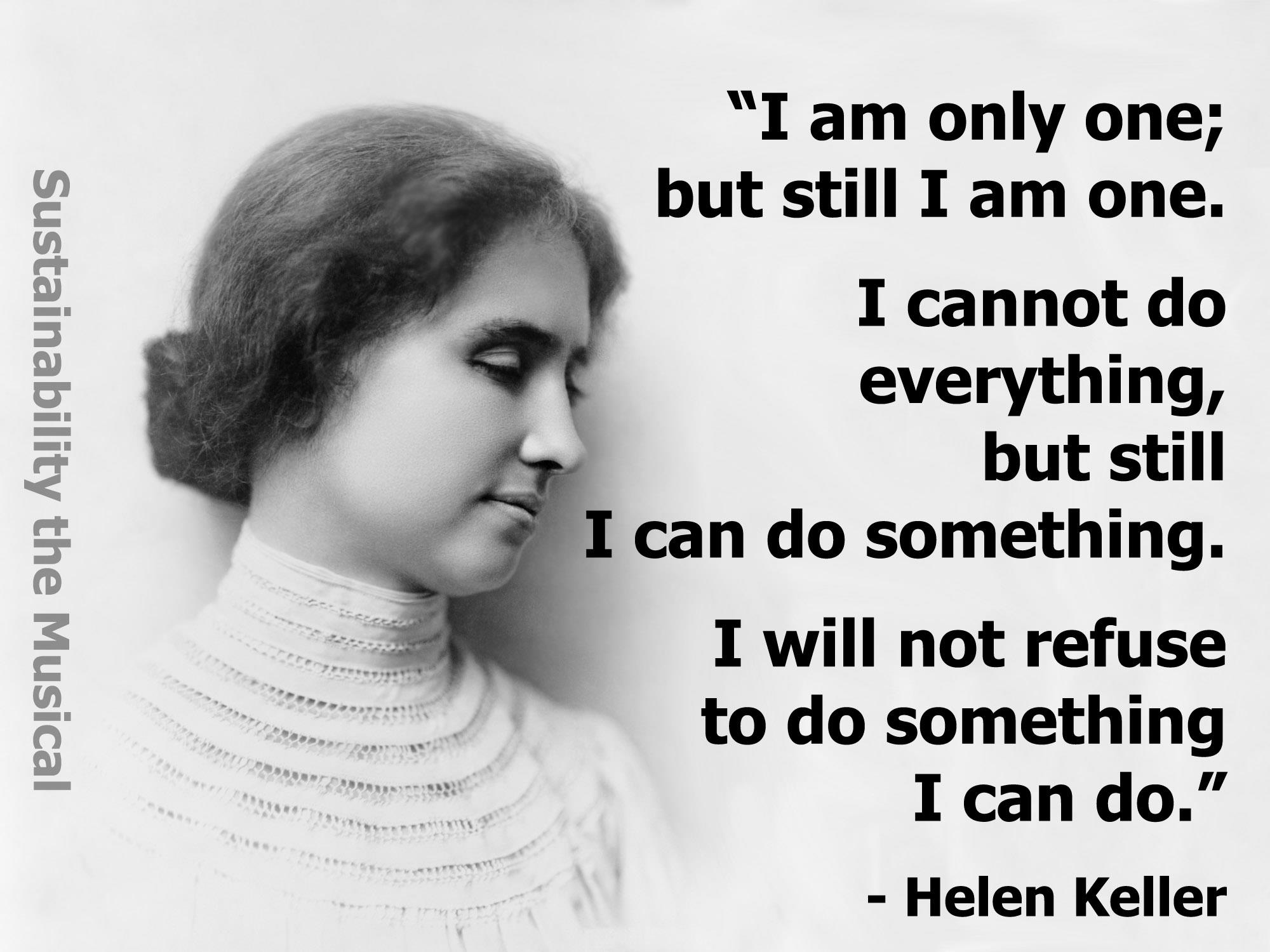
My Mental Awakening – Helen Keller

helen-keller-quote

Introduction: Here is a very interesting passage from a book by a very interesting woman
named Helen Keller.

She was born perfectly healthy in 1880, but became very ill at the age of 19 months.

Although she survived, Helen Keller was left totally blind and deaf.

In this book, she writes of her life and the path out of the isolation which she experienced when she could no longer hear or see.

Luckily, most of us will never have to experience this, so it is interesting to read what it would be like.

We can read about Helen Keller’s experiences and know that on a spiritual level we will all have this wonderful experience of beginning to know things that are not apparent to our natural senses.

Helen Keller writes: For nearly six years I had no concepts whatever of nature or mind or death or God. I literally thought with my body. Without a single exception my memories of that time are tactile.

I know I was impelled like an animal to seek food and warmth. I remember crying, but not the grief that caused the tears; I kicked, and because I recall it physically, I know I was angry. I imitated those about me when I made signs for things I wanted to eat, or helped to find eggs in my mother’s farmyard. But there is not one spark of emotion or rational thought in these distinct yet corporeal memories.

I was like an unconscious clod of earth. There was nothing in me except the instinct to eat and drink and sleep. My days were a blank without past, present, or future, without hope or

anticipation, without interest or joy.
It was not night—it was not day
But vacancy absorbing space,
And fixedness, without a place:
There were no stars—no earth—no time—
No check—no change—no good—no crime.
Then suddenly, I knew not how or where or when, my brain felt the impact of another mind, and I awoke to language, to knowledge, to love, to the usual concepts of nature, good, and evil. I was actually lifted from nothingness to human life.
My teacher, Anne Mansfield Sullivan, had been with me nearly a month, and she had taught me the names of a number of objects. She put them into my hand, spelled their names on her fingers and helped me to form the letters; but I had not the faintest idea what I was doing. I do not know what I thought. I have only a tactile memory of my fingers going through those motions and changing from one position to another.

One day she handed me a cup and spelled the word. Then she poured some liquid into the cup and formed the letters w-a-t-e-r She says I looked puzzled and persisted in confusing the two words, spelling cup for water and water for cup. Finally I became angry because Miss Sullivan kept repeating the words over and over again.

In despair she led me out to the ivy-covered pump house and made me hold the cup under the spout while she pumped. With her other hand she spelled w-a-t-e-r emphatically. I stood still, my whole body’s attention fixed on the motions of her fingers as the cool stream flowed over my hand. All at once there was a strange stir within me — a misty consciousness, a sense of something remembered. It was as if I had come back to life after being dead!

I understood that what my teacher was doing with her fingers meant that the cold something that was rushing over my hand was water, and that it was possible for me to communicate with other people by these hand signs.

It was a wonderful day, never to be forgotten. Thoughts that ran forward and backward came to me quickly— thoughts that seemed to start in my brain and spread all over me. Now I see it was my mental awakening. I think it was an experience somewhat in the nature of a revelation.

I showed immediately in many ways that a great change had taken place in me. I wanted to learn the name of every object I touched, and before night I had mastered thirty words. Nothingness was blotted out! I felt joyous, strong, equal to my limitations! Delicious sensations rippled through me, and sweet, strange things that were locked up in my heart began to sing.

When the sun of consciousness first shone upon me, behold a miracle! The stock of my young life that had perished, now steeped in the waters of knowledge, grew again, budded again, was sweet again with the blossoms of childhood. Down in the depths of my being I cried, “It is good to be alive!” I held out two trembling hands to life, and in vain would silence impose dumbness upon me henceforth.

That first revelation was worth all those years I had spent in dark, soundless imprisonment. That word “water” dropped into my mind like the sun in a frozen winter world.

The world to which I awoke was still mysterious; but there were hope and love and God in it,and nothing else mattered. Is it not possible that our entrance into heaven may be like this experience of mine?

Weather Warnings

light

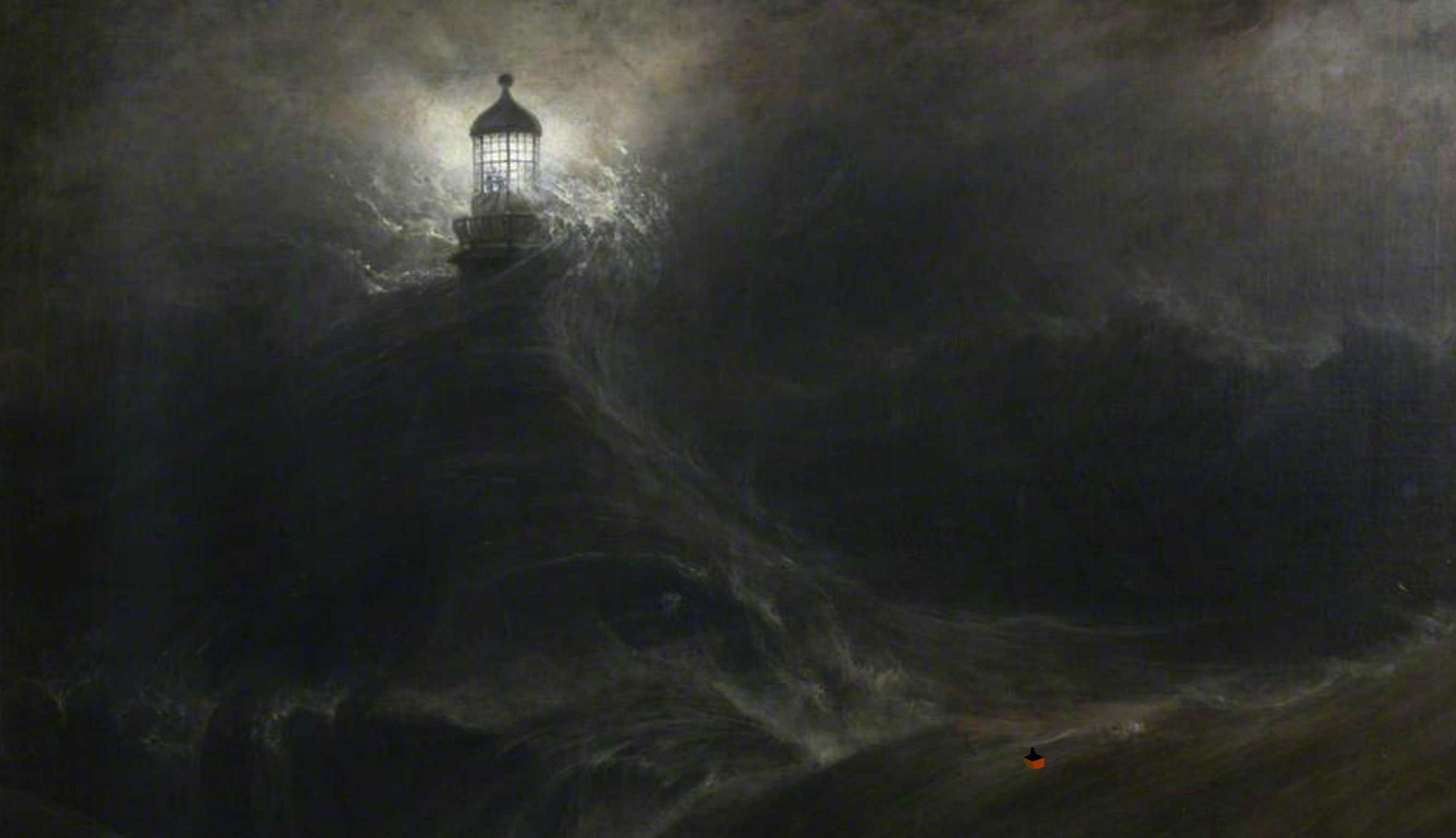
When times become uncomfortable we tend to look for instant relief, but it’s in these moments, when we are in the eye of the storm, that we must give it our full attention. We can be paralysed and stay stuck or we can respond and take action. If we choose to ignore the weather warnings and decide instead to distract ourselves by anaesthetising our emotional responses, we will eventually become despondent, finding ourselves destroyed on the rocks by the full force of the storm, or at best, lost at sea. We need to take action at the moment of discomfort and use our emotions as lighthouses to show us what we really fear and how this knowledge can then be used to navigate us out of mental turmoil and into more tranquil seas…..(ideally on a Sun-Seeker or Princess super yacht with some celebratory Champagne.)

box

Hiding in the Abbreviation.

I look closely, has it crumbled, is it cracked, are the gates really open?
Is this still the prison you designed, the home I built?
Every word became a brick, the looks cement,
Each blow a lock or bar in my cage of solitude.
Looking out, is this the landscape you made for me?
I am uncertain, is that two lights or three, is my pain still the stick that wounds?

I am supposed to be free, but somehow this place is chained to me,
Maybe its my comfort blanket in the cold, no authority to dictate to me.
Is this my world? I wrestle with myself when the sun hides,
Ask for faith to the light the way, Clarity lurks in the shadows maybe?
The guards of fear still clock into work each and every day,
Nightsticks and batons are ready, rubber bullets of loaded truth.

Certainty never was more than the terror of confusion, time shifting away,
Words don’t mean the same, the hand no longer inflicts with malice,
Yet I seek out the numbest place in which to weather the storm.
I go soft and compliant to absorb the searing agony that no longer comes,
My heart to still closes, my thoughts hide so I can understand I am the why.
My head still hangs a little, but I breathe and I survive

Leslie Willis

Hiding in the Abbreviation

Tribal Rules

photo(4)

So often the path we choose becomes our identity and in doing so blinkers us from ever seeing another’s perspective.

The sad thing about this is that this identity is caught up in ‘what we do’ and ‘how we do it’ and rarely with ‘WHY we do it’.

Our time can so often spent in defence or in constant justification of the methods we employ whilst dismissing the ideas practised by different fraternities, despite often being in the same discipline.

Our need to be right is often at the expense of never recognising another methodology that could get us closer to the real reason we embarked on a course of action, or a way of life, in the first place.

Our need to belong to something or to form an identity, paradoxically often limits us in those areas.

For example, two areas that I am interested in are Training and Psychology.
When I first started becoming interested in Human Psychology it was purely to find out why I personally did what I did and what, more importantly, I could do to improve my life.

Despite first studying Hypnotherapy and NLP, I refuse to be these things. I am neither a Hypnotherapist nor NLPer. For me they are simply tools to create a bigger picture – not an identity.

Since then I have continued to meet many people, read hundreds of books and go on a multitude of courses and lectures in an attempt to understand how our minds work. But my WHY stays the same. Simply to be ‘the person I could have come to originally, that would have had genuinely helped me change my situation.’

As long as I remember my WHY, I can stop myself wasting time defending ‘what’ or ‘how’ I do something with someone else, who is also attempting to be right.

This doesn’t mean I do not fall prey to needing to be right at times but it at least serves as a beacon when I am becoming lost in the sea of my own opinions and self-importance!

My training is the same. It would be easy to fall prey to the latest discussions regarding the best and worst training principles, whether Crossfit is better than bodybuilding for example (which seems to be something I see most days on the forums) or how bad someone’s technique is, but the argument is futile because it’s not about training, it’s a discussion about identity and about who is right and wrong.

Instead I would invite people to remember WHY they initially embarked on and exercise regime, rather than WHAT they choose.

I love training because of how it makes me feel at the end after a workout. (Often not so much during one!) But as I think back over the people I have trained with it has been irrelevant what we have been doing, as long as it has worked me hard or I have learnt something new that improves me. The only thing that makes me choose what I do today is because it fits with what my training outcomes are and what I want to achieve.

Like the psychology, with training I’m not a bodybuilder or crossfitter or whatever label someone may give me, instead I prefer to say ‘I’m just a bloke who likes training’

Because underneath it all, the WHY of the Crossfitter, the Bodybuilder, the strongman/woman, the long distance runner etc is all based around the same needs and in recognising this we can begin to remove prejudices and instead allow ourselves to recognise our similarities rather than our differences and that in fact we are all part of the same tribe.

Instead of arguing we can begin to spend the time sharing ideas towards creating what we all really want, which is to improve.

This is evident in so many areas where conflict arises and by recognising the similarities or the underlying reasons – our WHY for doing something, allows all of us a better chance of accomplishing our outcomes, rather than spending our energies defending what we think is the right way of accomplishing it.

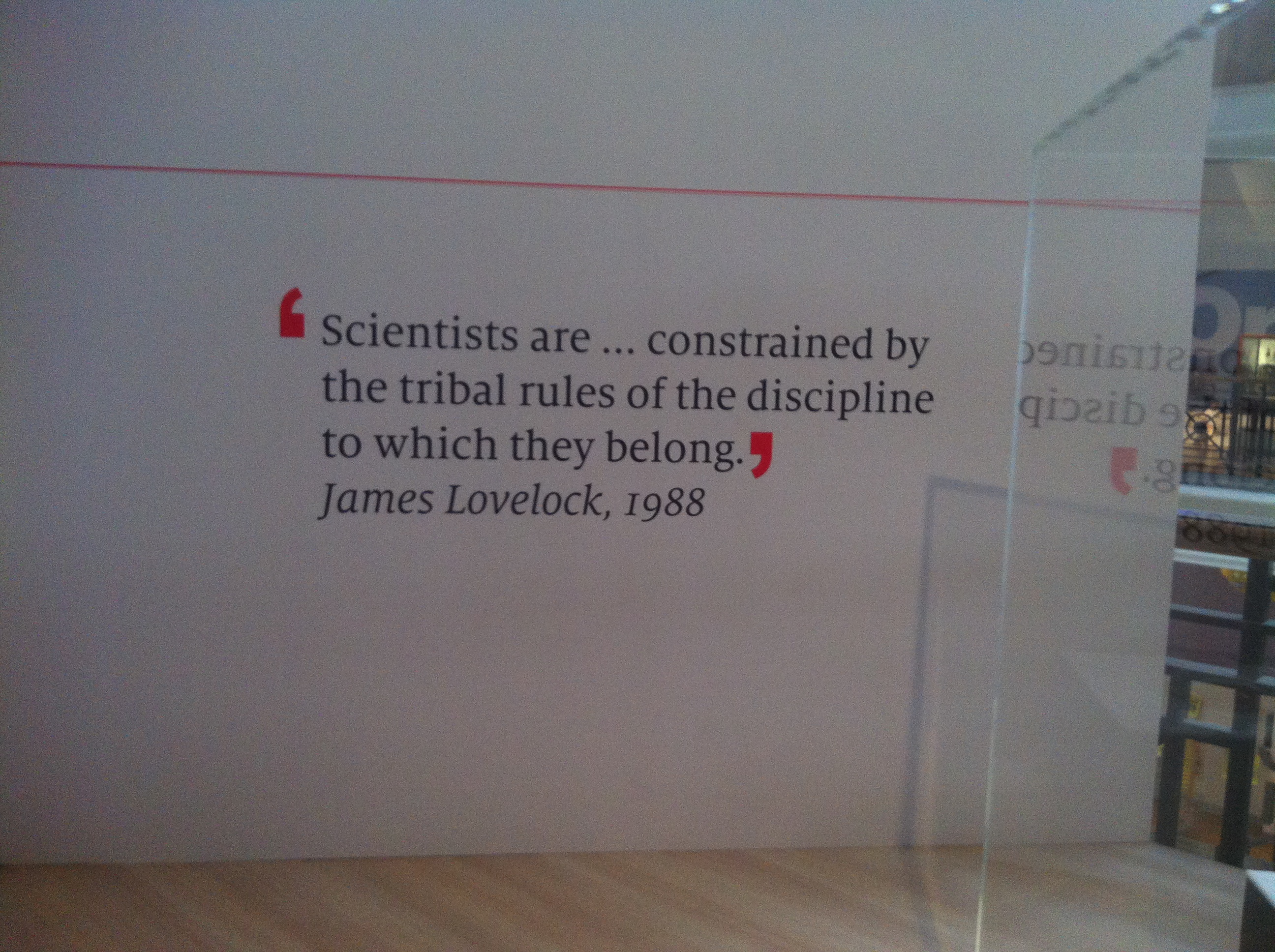
Do not be constrained by tribal rules of a certain discipline. Instead recognise WHY you want to achieve something and investigate all the disciplines that can move you closer to that goal.